


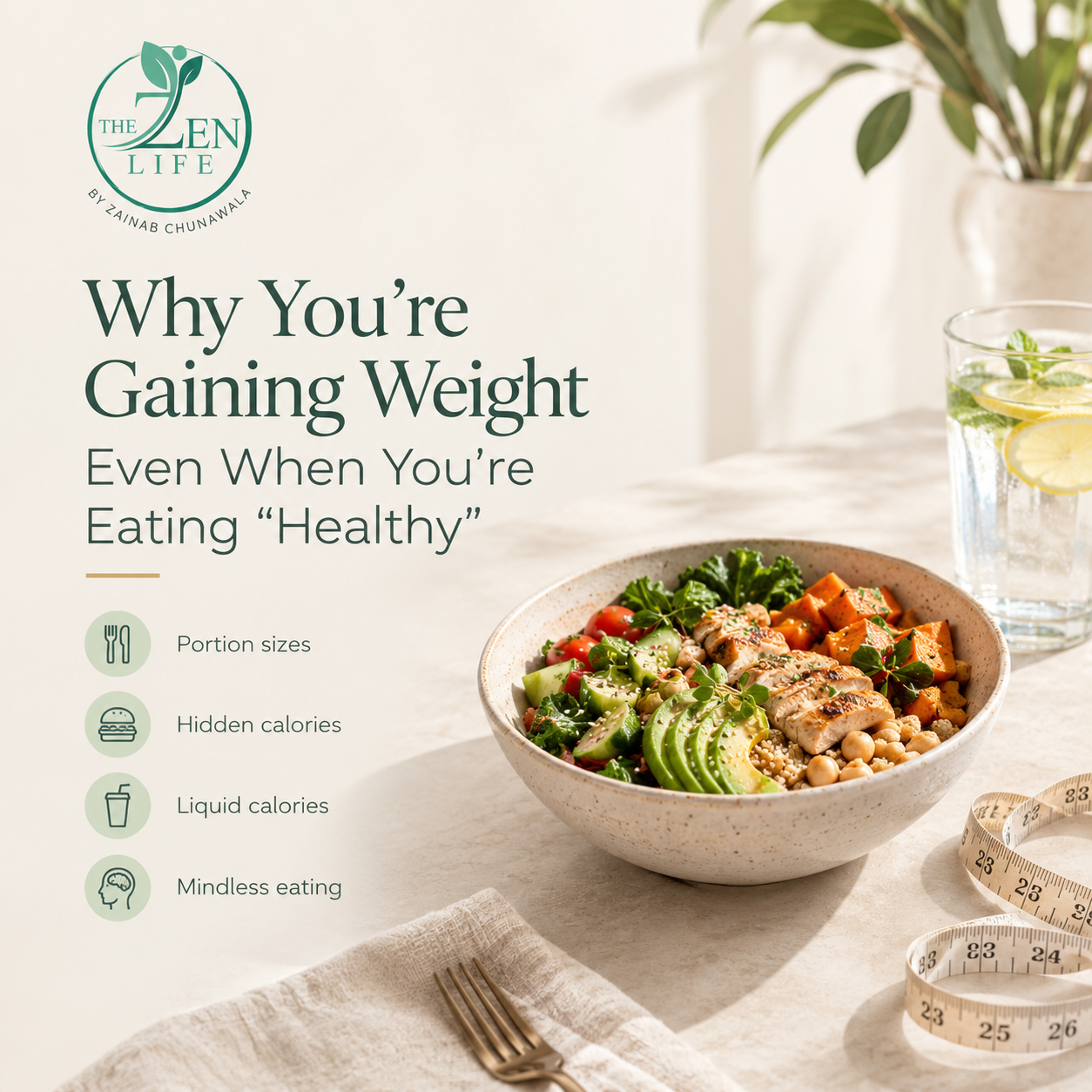
Why You’re Gaining Weight Even When You’re Eating “Healthy”
Eating healthy foods is important—but healthy doesn’t always mean low-calorie or suitable in unlimited portions. Weight gain can sometimes happen when small, easily overlooked factors add up over time.
Portion sizes matter. Foods like nuts, seeds, nut butters, avocado, rice, and healthy oils are nutritious, but they are also energy-dense. Larger portions can increase your overall calorie intake without you realizing it.
Then there are hidden calories—extra oil, dressings, sauces, spreads, toppings, and frequent “healthy” bites that can quietly add up throughout the day.
Liquid calories are another common factor. Smoothies, juices, sweetened coffees, shakes, and other beverages may contain significant calories while providing less satiety than a balanced meal.
Finally, mindless eating can make a difference. Eating while working, scrolling, watching TV, or simply grazing throughout the day can make it difficult to notice how much you’re actually consuming.
The goal isn’t to fear food or follow extreme restrictions. It’s about understanding portions, balance, eating patterns, and your individual nutritional needs.
Because sustainable weight management is not just about eating “healthy”—it’s about eating appropriately for your body, lifestyle, and goals.
Eating healthy foods is important—but healthy doesn’t always mean low-calorie or suitable in unlimited portions. Weight gain can sometimes happen when small, easily overlooked factors add up over time.
Portion sizes matter. Foods like nuts, seeds, nut butters, avocado, rice, and healthy oils are nutritious, but they are also energy-dense. Larger portions can increase your overall calorie intake without you realizing it.
Then there are hidden calories—extra oil, dressings, sauces, spreads, toppings, and frequent “healthy” bites that can quietly add up throughout the day.
Liquid calories are another common factor. Smoothies, juices, sweetened coffees, shakes, and other beverages may contain significant calories while providing less satiety than a balanced meal.
Finally, mindless eating can make a difference. Eating while working, scrolling, watching TV, or simply grazing throughout the day can make it difficult to notice how much you’re actually consuming.
The goal isn’t to fear food or follow extreme restrictions. It’s about understanding portions, balance, eating patterns, and your individual nutritional needs.
Because sustainable weight management is not just about eating “healthy”—it’s about eating appropriately for your body, lifestyle, and goals.