


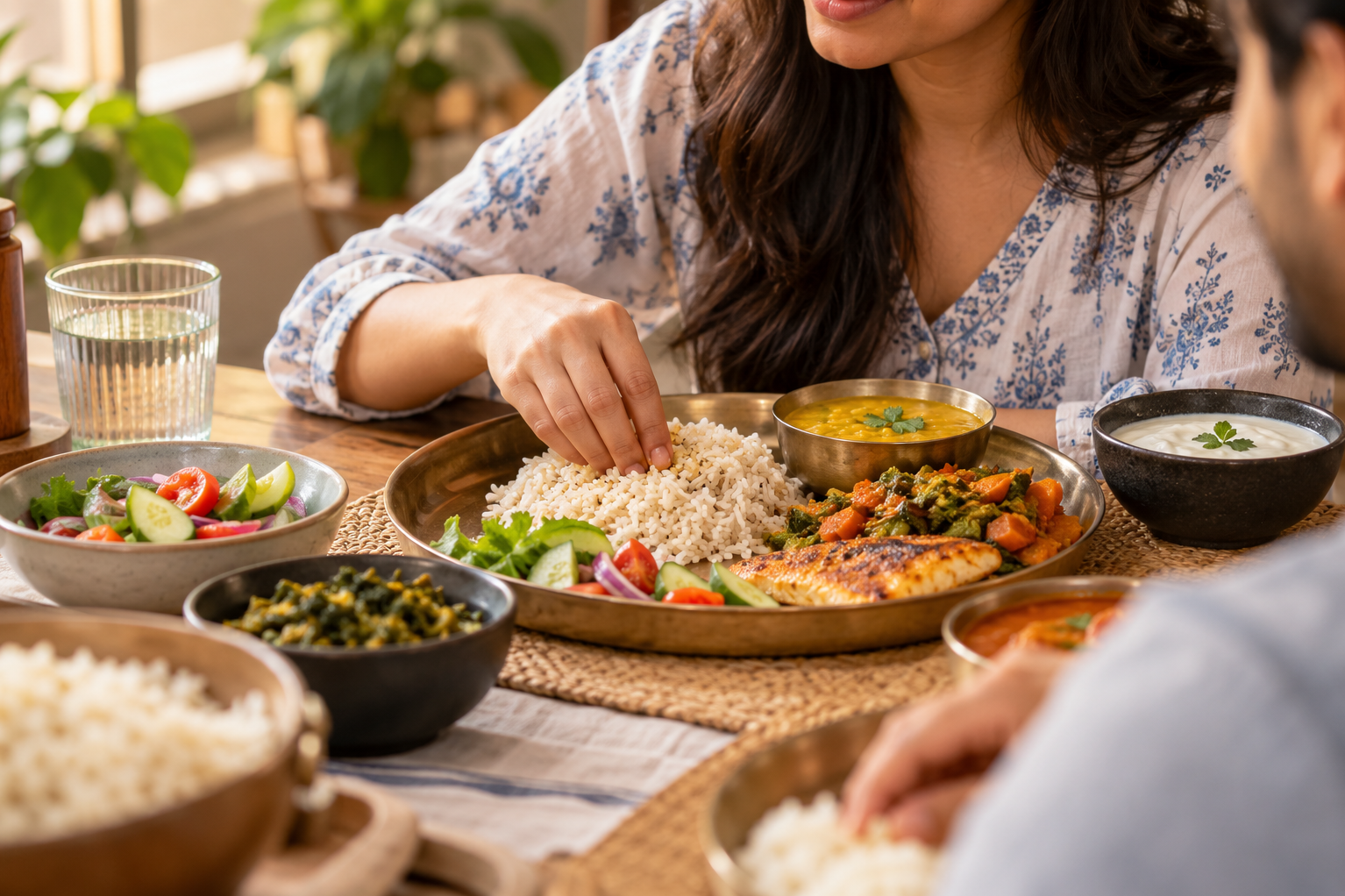
Rice is not the problem food many people assume it is; the balance of the plate, serving size, preparation and your overall eating pattern matter more than banning it. You will learn how to measure cooked rice, choose among common varieties, pair it with protein and vegetables, and recognise when individual clinical guidance is needed.
Key takeaways
- Pair rice with protein, vegetables, pulses and a measured amount of fat.
- Start with about ½ to 1 cup of cooked rice, then adjust to your needs.
- Choose rice variety based on taste, digestion, cooking time and meal context.
- Personalise rice portions for diabetes, weight goals, sports training or digestive conditions.
Can rice be part of a balanced meal?
Yes. Rice can supply the carbohydrate portion of a balanced meal when you pair it with protein, vegetables, pulses and an appropriate amount of fat instead of treating it as the entire plate.
Use this practical structure as a starting point:
- Half the plate: non-starchy vegetables such as bhaji, beans, cabbage, cucumber or salad.
- One-quarter: protein such as dal, beans, eggs, fish, chicken, paneer, tofu or curd.
- One-quarter: cooked rice or another grain.
Rice is relatively low in protein and fibre, so rice alone is less filling and less nutritionally complete than rice with dal, vegetables and curd. A Mumbai meal of rice, dal, bhaji and curd, fish curry with vegetables, or rajma with salad follows this pattern well.
Do not remove rice while continuing to eat large portions of bread, noodles, potatoes or other refined carbohydrates. Oil, fried sides, sweet drinks, dessert and second helpings also change the meal’s energy and glucose impact. That is why portion and overall meal composition matter.
For a rice balanced meal in Khar West Mumbai, the right proportions still depend on your energy needs, activity, age, health goals, pregnancy, medicines and medical conditions. A smaller rice serving with protein and vegetables can suit one person, while another needs a different balance.
How much cooked rice belongs on your plate?
1. Start with one small katori, about ½ cup of cooked rice, as a modest grain portion. A larger serving, closer to 1 cup, may suit a bigger body, higher activity level, greater energy need, or a meal with fewer other carbohydrate foods. Your goal and the rest of the day’s food also matter.
2. Keep rice to about one-quarter of the plate after adding vegetables and protein; do not fill the plate with rice first. Use the remaining space for vegetables and foods such as dal, eggs, fish, chicken, tofu, paneer, curd or beans.
This shows why portion and overall meal composition matter: rice alone after a long gap between meals may leave you hungry sooner, while protein and fibre improve satiety and nutrient density.
3. Measure rice after cooking. One cup of uncooked rice is not one cup of cooked rice because the grains absorb water and expand. A marked measuring cup or the same katori used consistently is more reliable than a ladle, whose size varies.
Knowing which carbs to choose and how to build a balanced meal is more useful than chasing one perfect rice serving. If you monitor glucose, count the cooked rice within your prescribed carbohydrate plan.
Which rice variety should you choose?
Choose rice by what it changes in your real meal, not by calling one variety universally superior. White rice is affordable, widely available and quick to cook, but milling removes much of its fibre.
Brown rice retains more outer grain and usually adds fibre; it also takes longer to cook and may be harder to digest or less acceptable at home.
OptionWhat changes in the mealWhat to considerWhite riceSoft, quick and familiarLower fibre after milling; portion mattersBrown riceMore chew and fibreLonger cooking; tolerance and taste varyParboiled riceFirmer grains; sometimes lower post-meal glucose response than soft, polished riceStill contains carbohydrate; portion mattersHand-pounded riceMore grain layers than heavily polished riceTexture, cooking time and availability varyRed or black riceColour and plant compoundsCost, texture, cooking time and local availability varyBasmatiAroma and often a lower glucose response than very soft riceNot permission for unlimited servings
Local everyday rice is a valid choice when it fits your budget, taste and meal. Cooking softness, serving size and your individual response matter more than a “healthy rice” label. The same principle guides which carbs to choose and how to build a balanced meal.
Cooled rice may contain more resistant starch, but it still contains carbohydrate. Cool it promptly, refrigerate it safely and avoid leaving cooked rice at room temperature, which allows Bacillus cereus to grow. Pair any rice with dal, beans, eggs, fish, chicken, paneer, tofu, curd and vegetables rather than eating it alone.
When is rice a better choice than roti, millet or noodles?
Rice is often the better choice when the meal includes dal, sambar, fish curry, rajma, chole, vegetables or curd. Its soft texture carries moist, fibre-rich dishes well and can suit a larger appetite or a quick tiffin.
OptionBest fitWatch forRiceCurries, dal and mixed dishesMeasure the cooked portionRotiA slower-to-eat, hand-held mealWhole-wheat flour adds more fibreMilletVariety and a firmer textureNot automatically lower in calories or carbohydrateNoodles, bread or potatoConvenience with protein and vegetablesKeep portions moderate
Roti may suit you if chewing and eating slowly helps appetite control, or if you prefer the fibre of whole-wheat flour. Millet adds variety, but it is not a free pass; which carbs to choose and how to build a balanced meal depends on appetite, tolerance, convenience and the accompanying food.
A rice balanced meal in Khar West Mumbai works in a restaurant or tiffin when rice shares the plate with dal or grilled or curried protein and a vegetable side. Do not treat fried starters, sugary beverages and dessert as separate from the meal. Rice plus roti plus potato can crowd out vegetables and protein.
Protein and fat can slow glucose absorption, but they do not cancel rice carbohydrate. For diabetes, kidney disease, gastrointestinal symptoms or coeliac disease, get individual guidance. Rice is naturally gluten-free, yet shared mills, storage areas, vessels and restaurant kitchens can cause gluten cross-contact.
When should rice guidance be personalised?
General plate guidance is not enough when diabetes medication, glucose readings, kidney function, potassium or phosphorus restrictions, digestive symptoms, pregnancy, age, activity, unexplained weight change or eating-disorder history affects your needs. Brown rice is not automatically suitable for chronic kidney disease, and a low-GI or cooled-rice claim does not replace medical advice.
That is why portion and overall meal composition matter.
SituationWhat assessment should examineWhy rice advice changesDiabetesMedicines, repeated post-meal glucose readings, cooking softness and activityCompare meals under clinician guidance; do not assume basmati, brown and parboiled rice produce identical readingsKidney diseaseKidney function, potassium, phosphorus, protein and carbohydrate needsBrown rice or another high-fibre rice may not fit the laboratory resultsDigestive symptomsBloating, diarrhoea, constipation, tolerance and preparationVariety, texture and portion may need adjustmentPregnancy, age or weight changeEnergy needs, symptoms, weight trend and meal adequacyA fixed katori can underfeed or oversupply you
For a rice balanced meal in Khar West Mumbai, bring your usual katori or plate, a three-day food record, rice variety, cooking method, restaurant or tiffin pattern, medicines, symptoms and relevant laboratory results.
A clinical nutrition Khar West consultation with The Zenlife can translate those details into a workable plan and coordinate with your physician when required.
Keep rice if it works for you: measure the cooked portion, add protein and vegetables, and adjust the whole meal rather than judging rice in isolation.
Related services
Lifestyle Optimization Plan
Plan 2 – Lifestyle Optimization Plan | The Zen Life by Zainab Chunawala The Zen Life by Zainab Chunawala offers a personalized Lifestyle Optimization...
View service →Weight Management
The Zen Life by Zainab Chunawala – Weight Management The Zen Life by Zainab Chunawala offers personalized Weight Management Plans designed to help...
Frequently asked questions
- Can rice be part of a balanced meal?
- Yes. Rice can provide the carbohydrate portion when you pair it with protein, vegetables, pulses and an appropriate amount of fat.
- How much cooked rice belongs on your plate?
- Start with about ½ to 1 cup of cooked rice and adjust the portion based on your energy needs, activity, health goals and the rest of the meal.
- Which rice variety should you choose?
- Choose a variety based on taste, texture, cooking time, digestion and how it fits the meal. Brown rice, hand-pounded rice, parboiled rice and white rice can all fit different eating patterns.
- When is rice a better choice than roti, millet or noodles?
- Rice can be the better choice when you prefer its texture, need an easy-to-digest carbohydrate, are pairing it with dal or a curry, or want a practical meal you will eat consistently.
- When should rice guidance be personalised?
- Seek personalised guidance when you have diabetes, kidney disease, digestive symptoms, a weight-management goal, high training demands or another clinical nutrition concern.
Related services
Maternal Nutrition
Plan 4 – Maternal Nutrition | The Zen Life by Zainab Chunawala The Zen Life by Zainab Chunawala offers personalized Maternal Nutrition guidance to...
View service →Clinical Nutrition
Plan 3 – Clinical Nutrition | The Zen Life by Zainab Chunawala The Zen Life by Zainab Chunawala offers personalized Clinical Nutrition support...
View service →General Consultation
General Consultation