

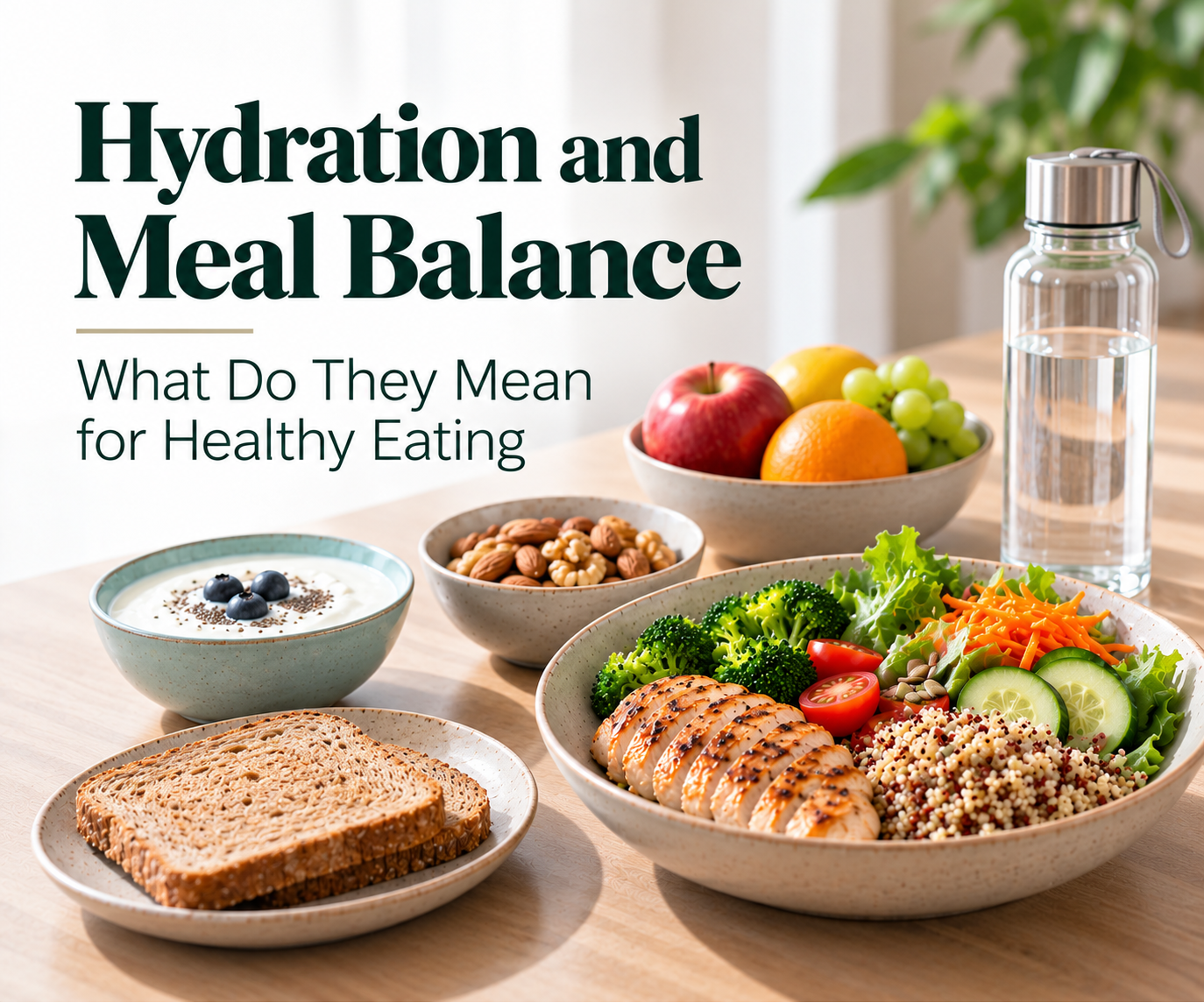
Hydration is more than counting glasses of water, and meal balance is more than reducing calories. You will learn how fluids, fibre, protein, carbohydrates, vegetables, fats, sleep and familiar Indian foods fit together so you can build satisfying meals and adjust your routine to your body’s needs.
Key takeaways
- Drink regularly and use thirst, urine colour, heat, and activity as guides.
- Build meals around protein, fibre-rich carbohydrates, vegetables, fruit, and healthy fats.
- Choose breakfast for nourishment and lasting energy, not calories alone.
- Personalise fluids and meals for health conditions, exercise, climate, and sleep.
What do hydration and meal balance mean in everyday eating?
Hydration and meal balance meaning is simple: hydration meets your fluid needs, while meal balance combines different food groups across the day. They work together because fluids support digestion, circulation and temperature control, while balanced meals supply energy, protein, fibre and micronutrients.
IdeaWhat it includesWhat to rememberHydrationWater, milk, soups, fruit, vegetables, tea and coffeeAbout 2.0 litres of total water daily for women and 2.5 litres for men in temperate conditions, including food and beverages; the NHS gives six to eight cups as a guide for many adultsMeal balanceProtein, higher-fibre carbohydrates, vegetables or fruit, healthy fats and suitable fluidsAim for a nourishing pattern across the day, not exact percentages on every plate
Use thirst, regular urination and usually pale-yellow urine as practical clues. Medicines, supplements and medical conditions can change urine colour, so judge it alongside fluid losses, heat and exercise. Sugary drinks add energy with less nutritional value, while alcohol creates separate health concerns and is not a substitute for water.
Heat, exercise, fever, vomiting, diarrhoea and pregnancy can raise fluid needs. Follow your clinician’s fluid restriction for heart failure, advanced kidney disease or liver disease; drinking extra water can be unsafe in these conditions.
Hydration and meal balance therefore mean responding to your body and circumstances, not obeying one universal eight-glass rule or a rigid plate formula.
How can you build a balanced plate and snack?
Use the plate proportions as a visual guide, not a rigid rule.
Fill about half with vegetables and, when suitable, fruit; one quarter with protein such as dal, beans, lentils, eggs, fish, chicken, paneer or curd; and one quarter with higher-fibre carbohydrates such as whole-wheat roti, brown rice, oats, potatoes with skin, millets or whole-grain bread.
Add a small serving of unsaturated fat from nuts, seeds, groundnut, mustard or olive oil.
Indian combinations can follow the same pattern:
- Two rotis with dal and mixed vegetables
- Rice with rajma, salad and curd
- Poha with peas, peanuts and fruit
- Idli with sambar, vegetables and curd
Build snacks from at least two food groups. Try fruit with nuts, roasted chana with chaas, or curd with seeds. Hydration and meal balance work together: water supports digestion, especially when meals contain more fibre.
Balance is judged across a day or week, so one meal does not fail because it lacks every category.
DrinkPractical roleWatch forWaterRoutine hydration without energyReplace lost fluids during heat or exerciseMilkFluid plus protein and nutrientsInclude its calories in your overall intakeUnsweetened tea or coffeeContributes fluidSugar, cream and high-caffeine versions change the balanceSugary drinks or alcoholAdds fluid and energyProvides less nourishment than a balanced food choice
Why does fibre make meals more filling and easier to balance?
Fibre slows digestion, adds volume to meals and helps you feel full for longer. It also absorbs water, increases stool bulk and supports regular bowel movements. When fibre-rich foods replace refined carbohydrates, such as white bread or white rice, they can produce steadier blood-glucose responses within a balanced meal.
Food choicePractical swapWhat changesWhite bread or riceWhole-wheat atta, brown rice or milletsMore fibre and longer-lasting fullnessFruit juiceWhole fruitFibre remains, so digestion is slowerPeeled potatoesPotatoes with their skinsEdible skin adds fibre and texture
Useful sources include beans, peas, lentils, vegetables, fruit, nuts, seeds, oats, whole-wheat atta, brown rice, millets and potatoes with their skins. The UK adult reference point is 30 grams of fibre daily, but treat it as a guide, not a pass-or-fail test.
Increase fibre gradually: add one serving of pulses or vegetables, keep edible skins, and replace one refined-grain serving at a time. Increase fluids alongside it because fibre needs water; suddenly adding large amounts of bran, pulses or fibre supplements can worsen bloating or constipation.
Combine fibre with protein and fat, such as dal with vegetables and curd, or oats with milk, nuts and fruit, rather than eating a plate of vegetables alone.
Ask for clinical advice before a major increase if you have irritable bowel syndrome, inflammatory bowel disease, bowel narrowing, swallowing problems or previous bowel obstruction.
What makes a healthy breakfast more than a low-calorie choice?
Thinking of a healthy breakfast as just low calorie misses what the meal must do. Plain tea with one biscuit, or a tiny serving of low-calorie cereal, can be low in protein, fibre and micronutrients, leaving you hungry soon after. Protein and fibre support fullness; fruit and vegetables add vitamins, minerals and other useful compounds.
More balanced choices include oats with milk, fruit and nuts; two eggs with whole-grain toast and fruit; vegetable poha with peanuts and curd; idli with sambar; or dal chilla with curd. Add water, milk or another suitable unsweetened drink for hydration.
- Does it contain a protein source, such as eggs, milk, curd, nuts, dal or beans?
- Does it include a fibre-rich carbohydrate or produce, such as oats, whole-grain toast, vegetables or fruit?
- Does it include water or another suitable drink?
- Does it provide enough food to carry you comfortably to the next meal?
Calories still matter for overall energy balance, but they do not show food quality, nutrient density or how long a meal will satisfy you. Sleep also affects breakfast decisions: most adults aged 18 to 60 need at least seven hours nightly. Insufficient sleep can make appetite regulation and food choices harder, without guaranteeing weight gain.
When should you personalise hydration and meal balance?
General guidance is enough when your routine is stable, you have no relevant symptoms, and thirst, urine and meals look consistent. Personalise hydration and meal balance when your fluid losses, energy needs or medical situation changes.
SituationWhat changesSafer approachHeat, exercise or activity changesSweating and energy demands can increase fluid and food needsAdjust to thirst, sweat loss and session lengthFever, vomiting or diarrhoeaFluid and electrolyte losses can rise quicklySeek medical advice if symptoms persist or you cannot keep fluids downPregnancy, breastfeeding or a high-salt dietFluid and energy needs may shiftReview drinks and meals with a qualified professionalHeart failure, advanced kidney disease, liver disease or a prescribed fluid restrictionExcess fluid and dehydration can both cause harmFollow the treating clinician’s exact fluid instructions
Judge repeated patterns, not one missed glass or one low-calorie meal. Track thirst, urine, meal timing, protein and fibre, fruit and vegetable servings, symptoms, sleep and activity across several days.
The Zenlife can provide a dietitian-led nutrition consultation in Khar West, Mumbai when familiar Indian meals need adapting to symptoms, medical guidance, lifestyle or changing energy needs. The useful outcome is a workable routine, not a generic water target or rigid plate formula.
- Drink to thirst and context.
- Include protein and fibre at meals.
- Add vegetables or fruit.
- Choose suitable fats.
- Adjust the plan when symptoms or clinical advice require it.
Related service
Lifestyle Optimization Plan
Plan 2 – Lifestyle Optimization Plan | The Zen Life by Zainab Chunawala The Zen Life by Zainab Chunawala offers a personalized Lifestyle Optimization...
Frequently asked questions
- What do hydration and meal balance mean in everyday eating?
- Hydration means meeting your fluid needs through water and other suitable drinks. Meal balance means combining food groups across the day to provide energy, protein, fibre, vitamins, and minerals.
- How can you build a balanced plate and snack?
- Fill your plate with vegetables or fruit, a protein source, fibre-rich carbohydrates, and a small amount of healthy fat. Combine at least two food groups in a snack, such as fruit with yoghurt or vegetables with hummus.
- Why does fibre make meals more filling and easier to balance?
- Fibre adds bulk, slows digestion, and supports regular bowel movements. Beans, lentils, vegetables, fruit, oats, and whole grains help meals stay satisfying without relying on large portions.
- What makes a healthy breakfast more than a low-calorie choice?
- A healthy breakfast supplies protein, fibre, fluids, and useful nutrients while supporting energy and concentration. A very low-calorie breakfast can leave you hungry if it lacks these components.
- When should you personalise hydration and meal balance?
- Personalise your routine when you exercise, work in heat, have a medical condition, take medicines that affect fluids or appetite, follow a restricted diet, or experience poor sleep or persistent hunger.