

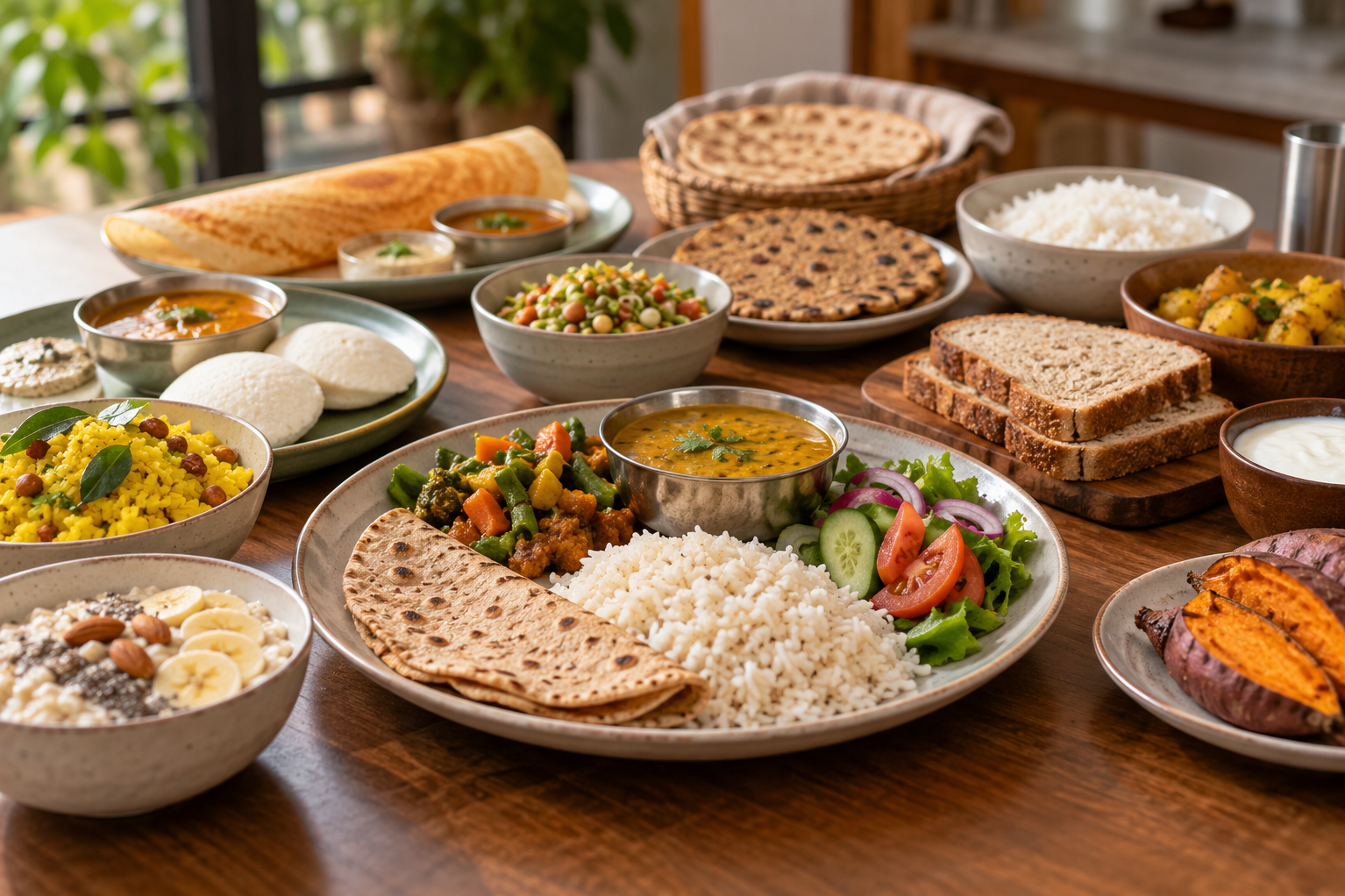
Rice, roti, bhakri, poha and bread can all fit a balanced meal; the better choice depends on the portion, preparation and what you eat alongside it. By the end, you will be able to select a practical carbohydrate, measure a serving without a weighing scale and combine it with protein and vegetables for everyday Indian meals.
Key takeaways
- Choose carbs based on the whole plate, not health claims.
- Use one cupped hand of cooked rice or two small chapatis as a starting portion.
- Pair every carb with protein, vegetables, and a fibre-rich food.
- Adjust portions for activity, diabetes, digestive needs, and meal patterns.
Choose the carbohydrate by the whole plate
Choose the carbohydrate that fits the rest of your plate, not the one advertised as universally healthy.
For how to build a balanced meal in Mumbai, aim for about half the plate as non-starchy vegetables, one quarter as protein such as dal, beans, eggs, fish, chicken or curd, and one quarter as rice, roti or another starch. Adjust the portion for hunger, activity, body size and medical needs.
OptionBetter whole-plate pairingCheck before choosingWhite, brown or hand-pounded riceDal, vegetables and curdKeep the serving measured; brown or hand-pounded rice adds variety and fibreWhole-wheat roti or jowar, bajra or ragi bhakriSabzi with dal, paneer, eggs or meatA large bhakri still provides substantial carbohydrateDosa or idliSambar and vegetable sidesCoconut chutney alone does not supply enough proteinPoha or upmaVegetables, peanuts and sprouts or curdPlain versions can leave you hungry soonerPotato, sweet potato, oats or breadPair with eggs, beans, curd and vegetablesFried potatoes, maida bread and sugary toppings change the mealKhichdiAdd vegetables and a protein-rich sideRice and dal together still need portion awareness
The useful question in balanced meal planning is which carbs to choose and what you can combine with them. Prefer steaming, boiling or pressure-cooking with measured oil; puri, bhatura, farsan and sweet drinks can make a modest-looking meal energy-dense.
Whole fruit is a better snack or dessert than juice because it provides fibre and requires chewing.
Compare Mumbai staples by refinement and preparation
Choose the least-refined, least-oiled option that fits the rest of your plate—not the food with the healthiest reputation. In Indian meal nutrition, preparation and portion matter as much as the grain.
OptionRefinement and preparationBetter pairing or useRiceWhite rice is more refined; brown or hand-pounded rice retains more fibre.Dal-rice with vegetables is more complete than rice alone.RotiWhole-wheat atta provides more fibre than maida-based breads or naan.Choose with sabzi, dal, eggs, paneer or curd.BhakriJowar, bajra or ragi retain their grain structure, but a large bhakri still supplies substantial carbohydrate.Pair with protein and vegetables; do not assume millet makes the meal unlimited.Dosa and idliBoth use fermented rice-lentil batter; dosa absorbs more oil when cooked generously.Idli with sambar is usually lighter than an oily dosa without sides.Poha and upmaFlattened rice and semolina are refined starches; vegetables, peanuts and pulses improve the meal.Add curd, sprouts, eggs or dal, rather than eating a plain bowl.Potatoes and sweet potatoesBoiling or pressure-cooking is easier to balance than frying.Treat them as the starch, not as the vegetable serving.OatsRolled or steel-cut oats are less processed than instant sweetened packets.Cook with vegetables and add protein.BreadWhole-wheat bread beats maida bread, but check that whole wheat leads the ingredient list.Combine with eggs, paneer, tuna or vegetables.
So which carbs to choose? Select based on hunger, activity, cooking oil and medical needs; the same carb changes value when paired with protein and half a plate of vegetables.
Measure the portion without a weighing scale
A practical carbohydrate portion is roughly one quarter of your plate: ½ to 1 cup of cooked food, measured with a 150–240 ml bowl, or one to two small rotis. Use the smaller portion when the meal also contains potato, sweet potato, corn or dessert.
- Rice, khichdi, poha or upma: ½–1 cup cooked, about one small katori.
- Roti: one 6-inch roti; two suit a larger appetite when vegetables and protein fill the rest of the plate.
- Bhakri: half to one 6-inch bhakri, because a thick one contains more flour than a thin roti.
- Dosa: one medium plain dosa; avoid adding another large starch portion.
- Idli: two small idlis, with sambar and vegetables.
- Oats: ½–¾ cup cooked; measure the dry oats before cooking if you want consistency.
- Bread: two small slices, preferably whole-wheat, with protein rather than butter or sugary spread.
Cooking changes the result. A small bowl of steamed rice differs from the same bowl of fried rice, puri or sugary cereal because oil and added sugar raise energy density. For balanced meal planning, use the same bowl and plate most days, then adjust upward for high activity or downward for low hunger.
This supports practical Indian meal nutrition without banning familiar foods.
Build the meal around protein, vegetables and fibre
Make the starch one part of the plate, not the whole meal. The practical answer to which carbs to choose and how to build a balanced meal in Mumbai is to pair rice, roti, poha, upma or bhakri with protein and plenty of non-starchy vegetables.
This combination adds fibre and protein, improves fullness and generally produces a slower post-meal blood-glucose rise than eating the starch alone.
Use this plate structure for balanced meal planning:
- Fill about half the plate with vegetables such as bhindi, cabbage, beans, gourds, cauliflower or leafy greens.
- Add one protein source: dal, usal, chana, rajma, curd, eggs, fish, chicken, tofu or paneer.
- Keep rice, roti, bhakri, dosa, idli, poha, upma or potatoes to about one quarter of the plate.
Fibre-rich vegetables and protein slow digestion, but they do not cancel an oversized serving of rice or several fried breads. Choose boiled, steamed or pressure-cooked foods more often, and measure oil rather than letting it accumulate in sabzi, poha or upma.
Local combinations work well: rice with dal, vegetables and curd; two smaller rotis with sabzi and usal; or thalipeeth with curd and a vegetable side. A vada pav, puri-bhaji or misal pav has less room for vegetables and fibre, so treat it as an occasional meal rather than building your routine around it.
Adjust the choice for activity, medical needs and local eating habits
A long walk, gym session or physically demanding workday can justify a larger carbohydrate portion; a sedentary day may call for less. Keep the plate pattern stable, then adjust the rice, roti, poha or other starch to your hunger, body size, glucose goals and activity.
For most healthy adults, do not eliminate carbohydrates. Keep about half the plate for non-starchy vegetables, include protein, and use roughly one quarter for starch. Steamed, boiled or pressure-cooked foods with measured oil are easier to balance than meals built around fried foods, excess salt or added sugar.
Individual adjustment matters if you have:
- Diabetes or prediabetes, where medication, timing, cooking form and post-meal glucose response matter more than choosing brown rice or millet alone.
- Pregnancy, breastfeeding, undernutrition or medicines that alter appetite or glucose.
- Kidney disease, which can change potassium, phosphorus, protein and fluid needs.
- Fatty liver disease, gastrointestinal disorders or food allergies.
Local eating habits can fit Indian meal nutrition: use dal with rice and vegetables, roti with sabzi and curd, or idli with sambar. Treat vada pav, misal pav and puri-bhaji as occasional choices because frying and refined bread reduce meal quality. Choose whole fruit over juice; it provides fibre and more chewing.
For people unsure which carbs to choose, clinical nutrition in Mumbai can connect symptoms, medicines, activity and familiar meals into a workable plan. The Zenlife can help test that plan against your routine rather than forcing a generic “Indian diet” list.
Related service
Clinical Nutrition
Plan 3 – Clinical Nutrition | The Zen Life by Zainab Chunawala The Zen Life by Zainab Chunawala offers personalized Clinical Nutrition support...
Frequently asked questions
- Which carbohydrate should you choose for a balanced meal in Mumbai?
- Choose the staple that fits your plate: rice, chapati, bhakri, poha, idli, or another carbohydrate paired with protein, vegetables, and fibre.
- How do Mumbai staples compare by refinement and preparation?
- Whole-grain options retain more fibre, while polished rice, refined flour, and heavily fried preparations provide less fibre and more added fat.
- How much carbohydrate should you eat without a weighing scale?
- Start with one cupped hand of cooked rice or poha, or two small chapatis, then adjust for your activity, health needs, and the rest of the plate.
- How should you adjust carbohydrates for activity or medical needs?
- Increase portions around demanding physical activity, and seek personalised guidance for diabetes, kidney disease, digestive conditions, or prescribed dietary restrictions.