

Choose unsaturated fats in measured portions, then pair them with protein, vegetables, legumes, and high-fibre carbohydrates rather than adding oil to an already energy-dense meal. You will be able to compare everyday Indian foods, cooking oils, packaged labels, restaurant dishes, and supplement claims while accounting for glucose readings, PCOS goals, and medical needs.
Key takeaways
- Choose unsaturated fats from nuts, seeds, fish, avocado and suitable cooking oils.
- Keep portions measured because healthy fats remain calorie-dense.
- Prefer whole-food fat sources over sugary packaged snacks and unverified supplements.
- Seek a clinical nutrition assessment when glucose, PCOS symptoms or weight goals need individual planning.
Which foods count as good fats for diabetes and PCOS?
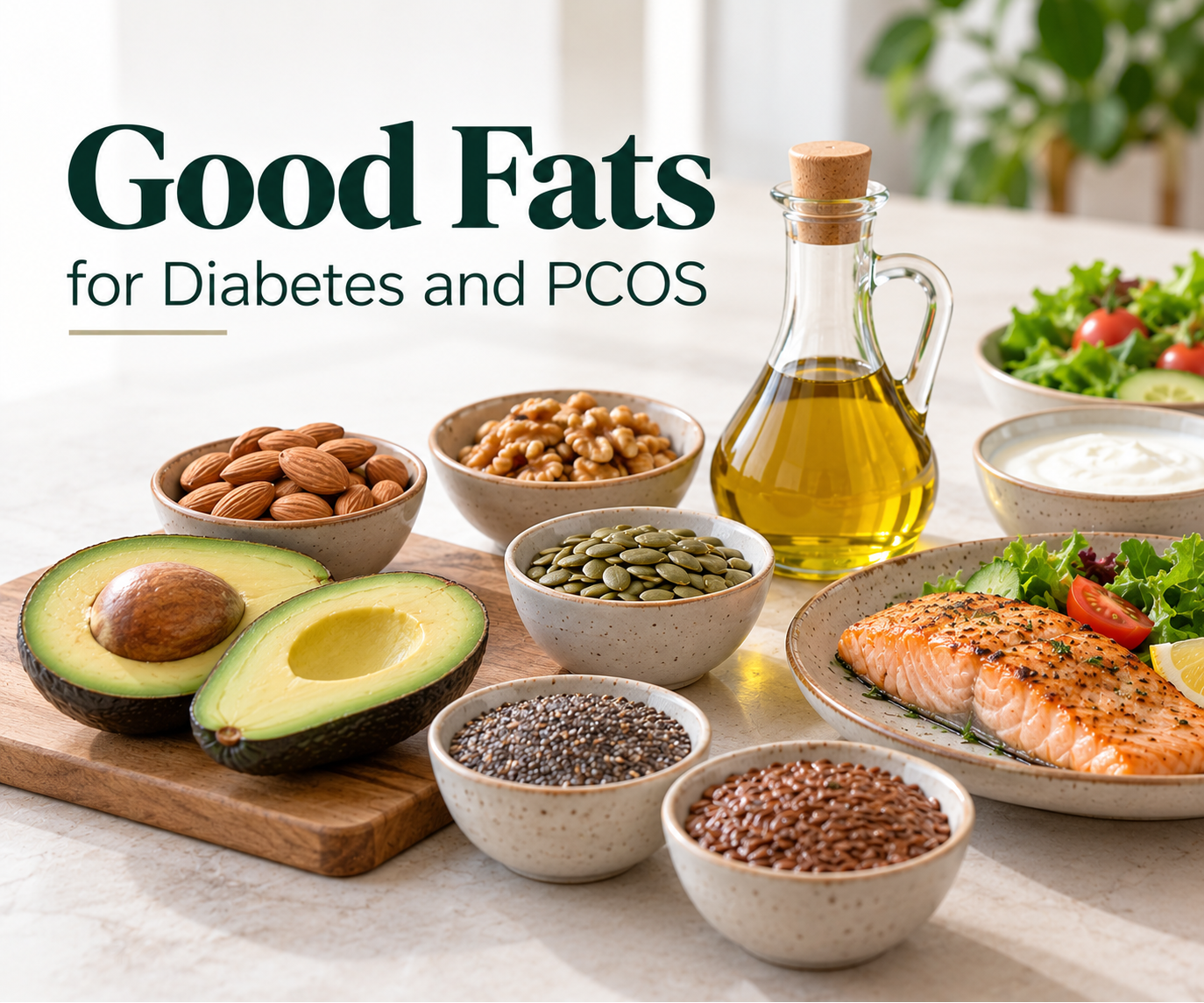
Choose unsaturated fats: monounsaturated fats from olive oil, groundnut oil, mustard oil, avocado, olives and almonds; polyunsaturated fats from walnuts, flaxseed, chia, sesame, soybean oil and oily fish. These are practical best sources of healthy fats, but they remain calorie-dense, so portions matter.
Food or sourcePortionIndian meal exampleExtra-virgin olive, groundnut or mustard oil1 teaspoonCook dal, sabzi or a vegetable stir-fry; measure it instead of free-pouringAlmonds or walnuts15 g: about 10 almonds or 3 walnut halvesAdd to unsweetened dahi or eat with fruit; choose seeds if nut-freeFlaxseed, chia or sesame1 tablespoon ground or soakedStir into oats, curd, chutney or a millet bowlAvocado¼ to ½ medium fruitAdd to a bean salad, roti filling or whole-grain toastOlives6–8 olivesAdd to a salad or vegetable bowl; check the salt if blood pressure is highOily fish such as sardines, mackerel or salmonAbout 100 g cookedPair with vegetables and a modest portion of brown rice; use tofu, flaxseed or chia if fish-free or vegan
For good fats for diabetes and good fats for pcos, replace ghee, butter, cream, vanaspati and partially hydrogenated oil rather than simply adding more fat. On labels, avoid “partially hydrogenated vegetable oil,” “hydrogenated fat” and “vanaspati”; fried snacks still combine fat with refined starch and salt, even when a different cooking oil is used.
How much oil, nuts, seeds, avocado, and fish should you eat?
Measure these foods instead of eating them by handful or pouring oil freely. A practical starting portion is 15–20 g of nuts, 1 tablespoon of seeds, ¼–½ avocado, or 1 teaspoon of oil for one person’s serving.
These foods supply good fats for diabetes and good fats for PCOS, but all are energy-dense at about 9 calories per gram.
Fat typeExamplesWhat to doUnsaturatedOlive, mustard, groundnut or rice-bran oil; nuts, seeds, avocado, oily fishUse measured portions and rotate sourcesSaturatedGhee, butter, coconut oil, cream, fatty meatKeep small and replace with unsaturated fatsTrans fatPartially hydrogenated oil, hydrogenated fat, vanaspatiAvoid; check ingredient lists
Build each meal with one measured fat, fibre-rich carbohydrate and protein. For example, add 1 tablespoon ground flaxseed to unsweetened curd, use 1 teaspoon mustard oil in a vegetable dish, or pair ½ cup dal with vegetables and a small portion of rice.
Choose oily fish such as sardines, rohu or mackerel about twice weekly, using roughly 100–120 g cooked per serving. If you do not eat fish, rotate walnuts, chia, flaxseed and sesame instead.
Oil choice is a trade-off, not a competition: extra-virgin olive oil suits dressings and low-to-moderate heat, while groundnut or mustard oil fits many Indian cooked dishes. Changing oil does not make deep-fried snacks suitable for regular eating; refined starch, salt and the total oil still count.
How do healthy fats affect glucose, insulin resistance, and PCOS goals?
Fat in a meal can slow gastric emptying, so glucose may rise later and remain elevated longer after eating. A lower reading soon after a high-fat meal does not prove better control; check the later pattern your clinician recommends.
Good fats for diabetes can improve meal satisfaction and reduce the urge to snack, but they still provide about 9 calories per gram, compared with 4 from carbohydrate or protein. Large portions of nuts, generous oil pours, creamy dressings, or repeated servings can undermine weight or energy goals.
Choosing the best sources of healthy fats means replacing saturated and trans fats with unsaturated options while keeping carbohydrate quality in view. Pair a measured fat portion with high-fibre carbohydrate, such as beans, vegetables, or minimally processed whole grains, rather than treating fat as a way to cancel sweets, refined flour, or oversized portions.
Good fats for PCOS support a sustainable cardiometabolic eating pattern; they do not directly cure irregular cycles, androgen excess, or infertility. There is no universally superior ketogenic, very-low-fat, or other named diet. Choose an approach that fits your culture, preferences, metabolic risk, and goals.
Do not change insulin or diabetes medication timing to compensate for a delayed glucose rise. Review repeated patterns with your clinician, especially if you notice:
- Later-than-expected highs after fatty meals
- Low glucose readings or hypoglycaemia
- Changes in weight, triglycerides, cycles, or PCOS symptoms
How can you choose packaged foods, supplements, and restaurant meals in Khar West?
Start with the serving size, not the front-of-pack claim. For packaged foods, compare total fat and saturated fat per serving, then check trans fat and the ingredients list. Reject “partially hydrogenated vegetable oil,” “hydrogenated fat,” or vanaspati. Check added sugar, especially in granola, flavoured nut butter, protein bars, and “diabetic” snacks.
A product can contain good fats for diabetes yet still add excess calories, refined carbohydrate, or sugar.
OptionWhat it meansWhen it appliesWhole foodsNuts, seeds, avocado, olives, or fish provide fat with fibre, protein, or micronutrientsMake these the best sources of healthy fats for regular mealsOmega-3 supplementConcentrated EPA or DHA, or plant-based ALA from flaxseed oilConsider only when fish intake, triglycerides, allergy, diet pattern, or medical advice makes it usefulFish-oil capsuleA supplement with variable EPA and DHA amountsCheck the exact dose and discuss blood thinners, pregnancy, or surgery with a clinician
At Mumbai restaurants, request the cooking method before ordering:
- Ask for grilled, steamed, tandoori, or sautéed food instead of deep-fried items.
- Say, “Please use less oil and measure it; no butter, cream, or vanaspati.”
- Request dressing, tadka, chutney, or mayonnaise on the side.
- Choose dal, vegetables, roti, or rice with a planned protein, rather than assuming a fried snack becomes suitable because groundnut or olive oil was used.
When is a clinical nutrition assessment useful in Khar West?
A personalised review is useful when food choices intersect with diabetes medication, high triglycerides, kidney disease, digestive symptoms, pregnancy planning, or PCOS with irregular cycles, androgen symptoms, or fertility goals.
General advice can identify unsaturated fats; clinical nutrition khar west should decide portions and meal timing around your glucose, laboratory results, medicines, activity, and eating pattern.
Bring:
- Recent HbA1c, fasting or post-meal glucose records, lipid panel with triglycerides, blood-pressure readings, and kidney-function results.
- Your medication and supplement list, including insulin, sulfonylureas, metformin, fish oil, and doses.
- A three-day food record with oil quantities, restaurant meals, hunger, digestion, sleep, and activity.
- Menstrual dates, cycle length, acne or excess-hair changes, weight history, and pregnancy plans if PCOS is relevant.
Track for 14 days: glucose before and two hours after selected meals, hunger from 0–10 before eating and two hours later, morning weight, bowel symptoms, and cycle or PCOS symptoms. Log triglycerides when your clinician repeats the blood test; do not infer them from daily glucose.
GoalGeneral advicePersonalised reviewChoose fatsReplace butter, vanaspati, and fried foods with measured unsaturated fatsAdjust portions for glucose, triglycerides, kidney function, and weightUse supplementsDo not assume fish oil is neededReview dose, medicines, bleeding risk, and triglycerides
The Zenlife can be one Khar West option when you want this record-based review rather than a generic list of the best sources of good fats for diabetes and PCOS Khar West.
Related service
Clinical Nutrition
Plan 3 – Clinical Nutrition | The Zen Life by Zainab Chunawala The Zen Life by Zainab Chunawala offers personalized Clinical Nutrition support...
Frequently asked questions
- Which foods count as good fats for diabetes and PCOS?
- Choose monounsaturated fats from olive, groundnut and mustard oils, avocado, olives and almonds. Choose polyunsaturated fats from walnuts, flaxseed, chia, sesame, soybean oil and oily fish.
- How much oil, nuts, seeds, avocado and fish should you eat?
- Use measured portions rather than pouring oil freely. Include a small serving of nuts or seeds, moderate avocado, and fish within your overall calorie and carbohydrate plan; a dietitian can adjust portions for your glucose, PCOS and weight goals.
- How do healthy fats affect glucose, insulin resistance and PCOS goals?
- Replacing butter, ghee-heavy meals and trans-fat-rich packaged foods with unsaturated fats can improve the overall fat quality of your diet. Healthy fats do not replace diabetes treatment and still add calories.
- How can you choose packaged foods, supplements and restaurant meals in Khar West?
- Read the ingredient list and nutrition panel, limit products with partially hydrogenated oils, and compare saturated fat, added sugar and serving size. Choose grilled or steamed dishes, request less oil, and avoid supplements unless a clinician identifies a need.
- When is a clinical nutrition assessment useful in Khar West?
- Book an assessment when you need a personalised plan for blood glucose, insulin resistance, PCOS symptoms, weight change, lipid levels, medication timing or food preferences. Bring recent reports, medicines and a typical three-day food record.