


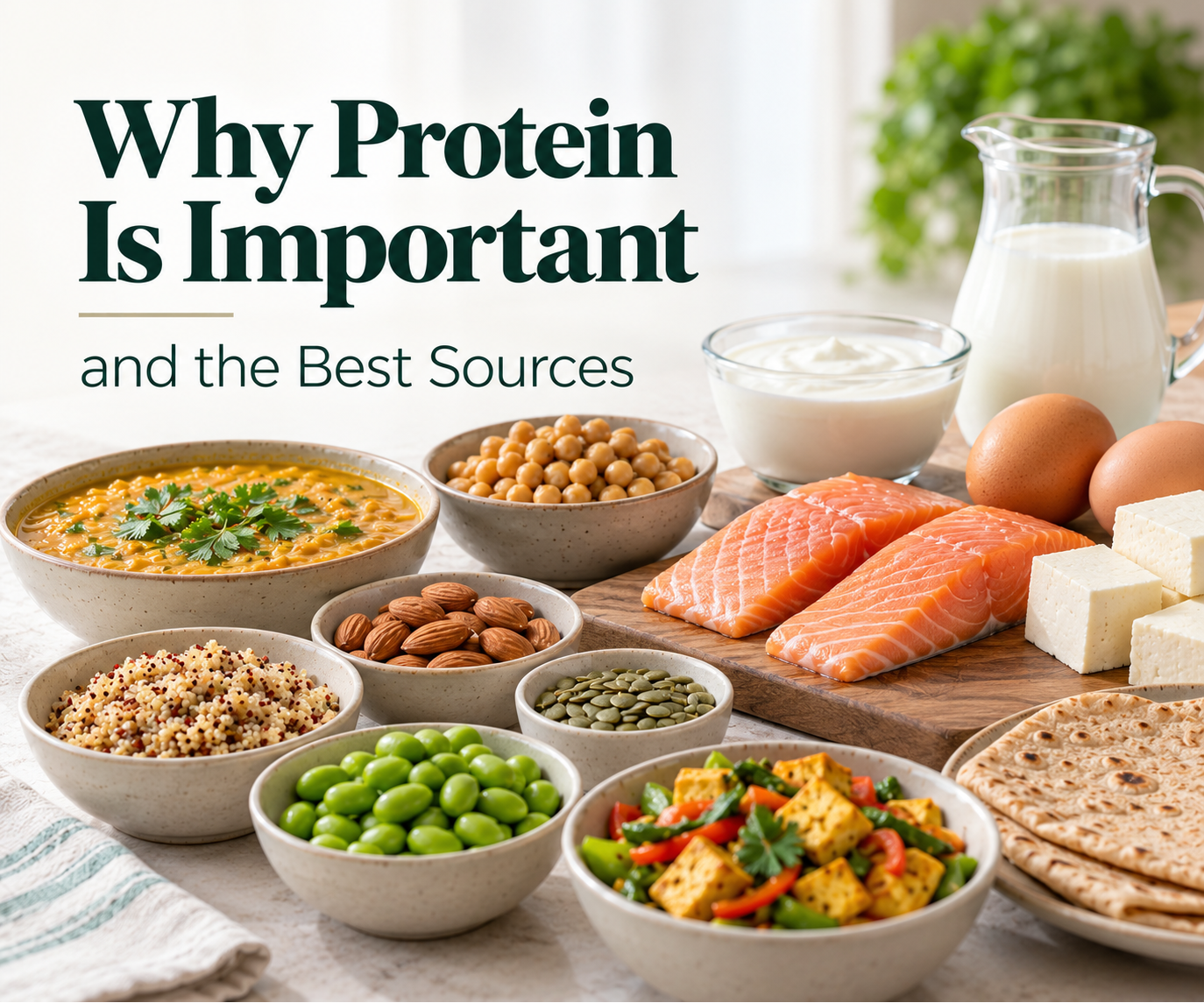
Protein supplies amino acids for muscle repair, enzymes, hormones, immune defenses, skin, hair, and every other tissue that must be built or maintained. By the end, you will be able to estimate a sensible daily target, compare animal and plant sources, and spread protein through familiar meals without relying on expensive shakes or perfect food pairings.
Key takeaways
- Calculate your daily protein target from body weight, activity, and health goals.
- Compare protein sources by amino acids, calories, fibre, and preparation—not grams alone.
- Combine dals, grains, beans, soy, nuts, and seeds across the day.
- Use supplements for convenience when food alone cannot meet your protein target.
What protein does and why protein quality matters
Protein is digested into amino acids, which enter the bloodstream and become building materials for your body. This protein function supports muscle repair, enzymes that drive chemical reactions, hormones that send signals, antibodies for immune defence, and the formation of skin, hair, organs, and other tissues.
Your body makes some amino acids, but the nine essential amino acids must come from food. The adult protein RDA is 0.8 grams per kilogram of body weight daily, or about 0.36 grams per pound. That is a minimum for adequacy, not necessarily an optimal target for muscle retention, satiety, ageing, or training.
“Complete protein sources” provide all nine essential amino acids in useful proportions. “Incomplete proteins” is an imperfect label for many plant foods: most contain all nine, but one or more amino acids occur in lower proportions, and digestion can release fewer of them than animal proteins.
Soy is a notable plant exception because tofu, tempeh, edamame, and soy milk provide all essential amino acids in meaningful amounts. Varied intake across the day can cover needs without pairing foods at every meal.
- Leucine helps trigger muscle protein synthesis.
- The FAO’s DIAAS evaluates protein quality through amino-acid composition and digestibility.
- Protein grams alone can mislead: two foods with 20 grams may deliver different amounts of usable essential amino acids.
How much protein you need and how to calculate your target
Start with your body weight in kilograms, then multiply it by 0.8. That is the adult daily protein requirement: 0.8 g protein per kg of body weight per day, or 0.36 grams per pound. This protein calculator gives a minimum adequacy target, not automatically the best intake for exercise, ageing, dieting, or muscle preservation.
- Weigh yourself in kilograms. If you weigh 70 kg, 70 × 0.8 equals 56 grams of protein per day.
- Raise the target to 1.4–2.0 g/kg/day for regular resistance or endurance exercise.
- Use 1.1 g/kg/day during pregnancy and 1.3 g/kg/day during breastfeeding.
- Healthy older adults often need 1.0–1.2 g/kg/day; illness or recovery can raise the practical range to 1.2–1.5 g/kg/day.
Your actual weight can exaggerate the target when you have obesity, so an adjusted body weight can provide a more useful reference than multiplying by total body weight. If you are underweight, calculate protein needs alongside calorie and weight-restoration goals rather than applying a generic number.
Chronic kidney disease requires a kidney disease caveat: do not self-prescribe a high-protein diet. Stage, diabetes, body size, and dialysis status change the target. The Zenlife can help adapt the arithmetic to your age, training, pregnancy, kidney function, diabetes, and recovery status while keeping medical advice in the plan.
The best animal protein sources: compare the whole food, not just the grams
The best animal protein sources depend on the whole food package, not protein grams alone. Eggs protein is convenient and nutrient-rich: one egg provides about 6 grams, along with choline and vitamin B12. Milk and yogurt protein also brings calcium; strained yogurt concentrates more protein than regular yogurt.
OptionProtein and nutrientsFat, sodium, and effortEggsAbout 6 g per egg; choline and B12Low sodium when plain; boil or cook with little oilMilk or yogurtAbout 8 g per cup of milk; yogurt adds calcium, with strained yogurt providing more proteinChoose unsweetened versions; minimal preparationPaneerRoughly 18–20 g per 100 gPaneer protein and calories rise together; regular paneer is substantial in fat, while lower-fat paneer reduces the energy costFish, chicken, lean meatCommonly 25–30 g per 100 g cooked; salmon and Indian mackerel add omega-3 fatsFresh foods need cooking, but provide less sodium than processed optionsSausages, bacon, salamiProtein varies by productProcessed meat and sodium often come with saturated fat; WHO/IARC classifies processed meat as carcinogenic to humans
Choose fish, chicken, or lean meat when you want high protein density; choose eggs, dairy, or paneer when convenience matters. Grilling, steaming, pressure-cooking, or using a small amount of oil changes the food package far less than deep-frying.
Processed meat is not an equal substitute for fresh fish, eggs, dairy, or minimally processed poultry. High protein content does not cancel its added sodium, saturated fat, and processing-related health concerns.
The best plant proteins and how to combine them across the day
Soy foods are among the best plant protein sources because soy protein supplies all nine essential amino acids in meaningful amounts. The table uses typical servings; brands, recipes, and cooking methods change the numbers.
FoodProteinFibre and caloriesPreparation timeSoy milk, 1 cup7 g1–2 g fibre; 80–130 kcalReady to drinkEdamame, 1 cup17 g8 g fibre; about 190 kcal5–8 minutesTofu, 100 g10–15 g1–2 g fibre; 75–150 kcal10–15 minutes; needs seasoningTempeh, 100 g18–20 g5–7 g fibre; about 190 kcal15–25 minutesDal, beans and chickpeas, ½ cup cooked7–9 g6–9 g fibre; 110–160 kcalSoak and cook, or use cannedPeas, ½ cup cooked4 g4 g fibre; about 65 kcal5–10 minutesQuinoa, 1 cup cooked8 g5 g fibre; about 220 kcal15–20 minutesNuts and seeds, 25–30 g5–9 g2–5 g fibre; 150–200 kcalReady to eat
1. Use dal protein, beans and chickpeas, or peas with vegetables at one meal; add rice or roti for energy, not because a same-meal amino-acid match is required.
2. Include soy milk, edamame, tofu and tempeh across the week. Tempeh can require more cooking effort or cost more than tofu.
3. Add quinoa, nuts and seeds in practical portions. Nuts and seeds provide unsaturated fat, but large handfuls add calories quickly.
You do not need perfectly paired complementary proteins at every meal. Vary legumes, soy foods, grains, nuts and seeds across the day, and eat enough total energy.
How to spread protein through Indian meals and decide whether supplements help
Use protein distribution to avoid leaving most of your intake for dinner. A practical starting point is 25–40 grams protein per meal, adjusted for body size, daily target, age, and protein quality. Total daily intake matters more than exact timing, but spreading protein across meals helps older adults and people trying to preserve muscle.
1. Build breakfast around a protein anchor: milk or yogurt with eggs, or besan chilla with curd. A vegetarian Mumbai household can also choose idli with sambar, tofu bhurji, or soy chunks with vegetables.
2. Add protein at lunch: dal, rajma, chole, tofu, paneer, fish, or chicken alongside roti or rice. At dinner, repeat the same structure with a different protein source, such as dal khichdi with yogurt, tofu, fish, or chicken.
3. Add protein snacks when meals fall short. Yogurt, milk, roasted chana, boiled eggs, or a small portion of nuts and seeds can help close the gap.
For protein powder versus food, remember that powder is convenient, not inherently superior. If food already supplies enough protein, supplementation adds modest benefit; resistance-training research suggests gains tend to plateau near 1.62 g/kg/day. Shakes also add calories, so protein for weight management still depends on total energy intake.
Kidney disease, unexplained weight loss, or recovery from illness requires professional guidance before you raise protein or start supplements.
Frequently asked questions
- What does protein do in the body?
- Protein breaks down into amino acids that support muscle repair, enzymes, hormones, antibodies, skin, hair, organs, and other tissues.
- How much protein do you need each day?
- Calculate your target from body weight, activity level, age, health goals, and medical needs rather than using one number for everyone.
- Which animal protein sources are best?
- Compare eggs, fish, chicken, meat, dairy, and yoghurt by protein quality, calories, saturated fat, fibre, preparation, and overall nutrient value.
- How can you get enough protein from plant foods?
- Eat varied sources such as dal, beans, chickpeas, soy, tofu, nuts, seeds, and whole grains, combining complementary foods across the day.
- Do you need a protein supplement?
- A supplement can help when meals consistently fall short or convenience matters, but whole foods should form the foundation of your diet.