


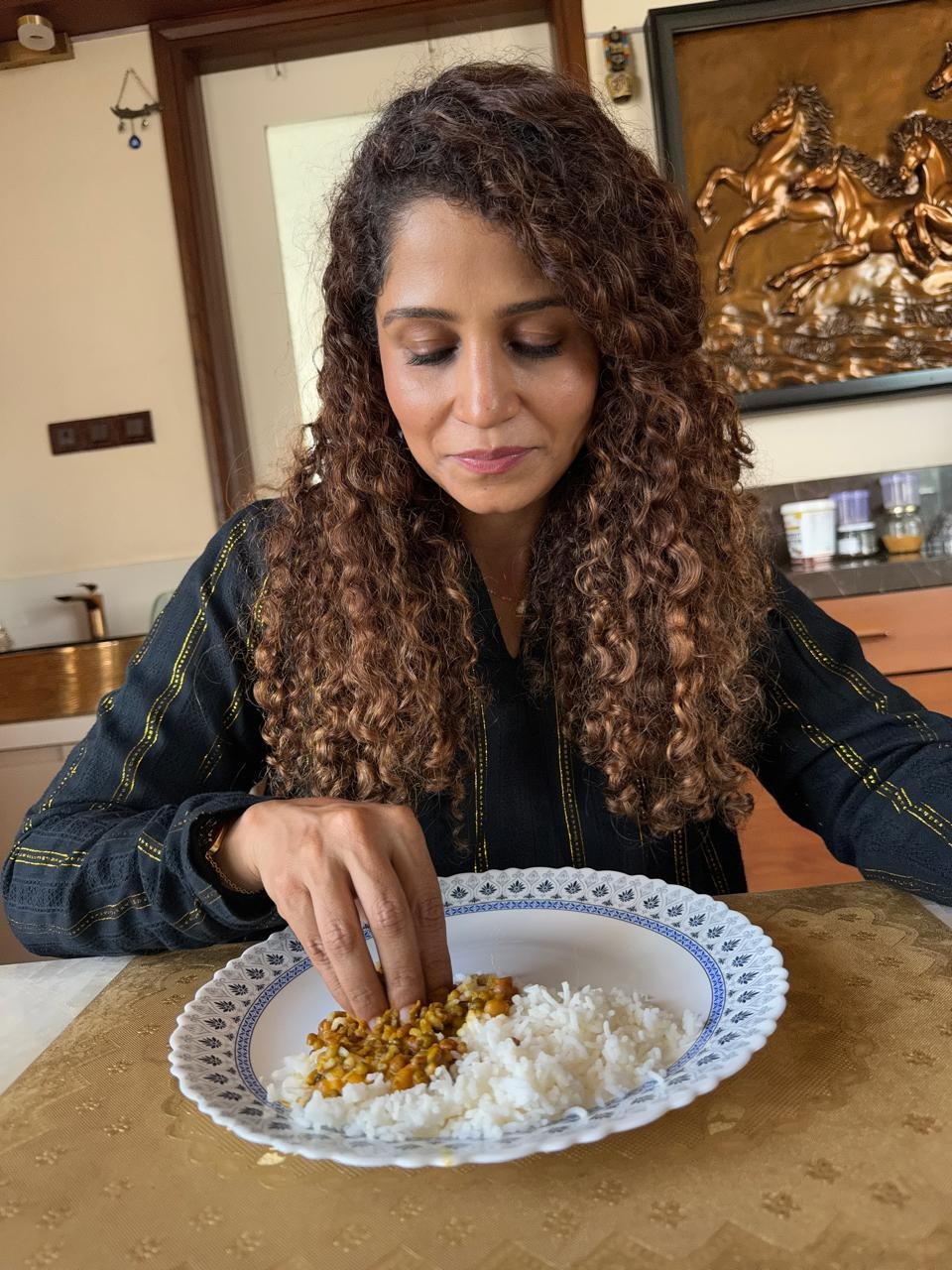
A thali can contain vegetables, dal, rice, curd and salad yet still become unbalanced through oversized grain portions, little protein, excess oil or salty accompaniments. By using household measures, adapting familiar Mumbai meals and matching portions to your health needs, you can build a balanced plate without banning rice, roti or occasional street food.
Key takeaways
- Fill half your plate with non-starchy vegetables as a flexible starting point.
- Pair rice, roti or poha with protein such as dal, eggs, curd or paneer.
- Check hidden oil, sugar and salt in Mumbai snacks, drinks and restaurant meals.
- Medical conditions, medicines, pregnancy and activity levels can change your plate.
What belongs on a balanced Indian plate?
A balanced Indian plate starts with half the plate filled by non-starchy vegetables, then adjusts the remaining space for protein and carbohydrate. This is a practical starting point, not a compulsory ratio: age, body size, activity, pregnancy, medicines and medical conditions change your needs.
For building a balanced Indian plate, use these household measures as a guide:
- Vegetables: about 2 katoris, or half the plate; include leafy vegetables, gourds, beans, cauliflower or mixed seasonal vegetables.
- Protein: 1 katori of dal, chana or rajma, or a palm-sized serving of paneer, eggs, fish or chicken.
- Grains or starch: 1–2 rotis or about 1 cup cooked rice; reduce this portion when the meal also contains potato, corn or another starchy food.
- Curd or alternative: ½–1 katori plain curd, or a suitable unsweetened fortified alternative.
- Fat: a measured amount of oil, nuts or seeds rather than unrestricted fried additions; add whole fruit separately when it is not already part of the meal.
The ICMR–NIN model assigns roughly 45% of daily energy to cereals and millets, not to every individual meal. Its reference pattern includes about 400 g vegetables and 100 g fruit across the day, so potatoes cannot replace all non-starchy vegetables.
Balanced Indian meal nutrition also depends on safety: wash produce, use safe water, cook animal foods thoroughly, and refrigerate cooked food promptly instead of leaving it at room temperature.
How to build balanced Indian breakfasts, lunches and dinners
Building a balanced Indian plate works across the day, not by forcing identical portions at every meal. Pair a carbohydrate with protein and vegetables, then adjust quantity for your appetite, activity, body size and clinical needs.
1. Start breakfast with protein rather than serving only starch. Combine two idlis with sambar and a vegetable side, vegetable poha with peanuts and curd, or one dosa with sambar and an egg. If you choose paratha, add curd and cooked vegetables instead of another refined carbohydrate.
2. Make lunch the most vegetable-rich meal when possible. Fill about half the plate with non-starchy vegetables, then add one cup cooked rice or one to two rotis, plus one katori dal, chana, rajma, curd, fish, chicken, eggs, paneer or tofu. Potatoes do not replace the full vegetable portion.
3. Keep dinner similar but scale the carbohydrate to your evening hunger and activity. Try two rotis with mixed vegetables and dal, or rice with fish and a vegetable curry. A vegetarian meal still needs a deliberate protein source; vegetables and rice alone will not provide enough.
4. Spread carbohydrates instead of concentrating them in one large meal. Choose whole grains, millets, pulses and whole fruit more often than sugary drinks, biscuits or large servings of white rice. This matters especially for diabetes or prediabetes, where total carbohydrate and its distribution both affect glucose control.
5. Add fruit or unsalted nuts between meals if hungry, and count tea sugar, namkeen, pickle and papad. Store cooked food safely; a nutritionally balanced plate can still cause illness when left at room temperature too long.
How do you balance Mumbai favourites and hidden extras?
Keep the favourite, but control the cooking method, hidden extras and serving size. A fried vada pav is a concentrated snack, not a complete meal; pav bhaji becomes more balanced with extra bhaji and less butter; biryani needs a smaller rice portion with raita and vegetables.
This is balanced Indian meal nutrition in practice, not an all-or-nothing rule.
- Vada pav: choose one, skip extra fried chilli and pair it with unsweetened chai, curd or fruit later. Do not add another fried snack.
- Pav bhaji: request less butter, take more bhaji than pav, and treat cheese, mayonnaise and sweetened drinks as separate extras.
- Biryani: serve about one cup cooked rice, choose a palm-sized egg, chicken or fish portion, and add plain raita or salad. Restaurant biryani often carries oil and salt beyond what you can see.
- Misal: prioritise usal and sprouts, limit farsan, and use one pav instead of several. The farsan, pickle and kat can raise fat and sodium quickly.
- Thali: select one grain serving, one dal or protein, two vegetable portions and curd; leave room for either papad, pickle or dessert rather than taking all three.
- Office lunch: measure oil-heavy gravies by spoonful, choose dal, vegetables and roti or rice, and replace sugary chai, biscuits and packaged snacks with fruit or unsalted nuts.
Eat freshly cooked food promptly and refrigerate leftovers rather than leaving rice, meat or dairy at room temperature for prolonged periods. Portion adjustments still depend on your activity, body size and medical needs.
When does a clinical condition change the plate?
A diagnosis can change the grain, protein, salt, fibre, or portion—not the need for balance. Building a balanced Indian plate starts with your medicines, laboratory results, symptoms, allergies, appetite, and usual foods; one fixed ratio cannot fit every condition.
| Condition | How the plate changes | Practical Indian choices |
|---|---|---|
| Diabetes or prediabetes | Keep carbohydrate portions measured and pair them with protein, vegetables, and fibre. | Choose one roti or a small rice serving with dal, paneer, eggs, fish, or chicken; avoid sugary drinks. |
| High cholesterol | Replace ghee, butter, fried foods, and fatty meat with unsaturated fats and soluble fibre. | Use oats, barley, beans, vegetables, nuts, seeds, and limited oil. |
| Hypertension | Reduce sodium from pickles, papad, packaged snacks, instant foods, and restaurant gravies. | Taste with lemon, herbs, garlic, and spices; follow potassium advice if prescribed. |
| Fatty liver | Reduce alcohol, sweet drinks, excess sugar, and oversized refined-carbohydrate portions. | Build meals around vegetables, pulses, lean protein, and measured grains. |
| Kidney disease | Protein, potassium, phosphorus, salt, and fluids require stage-specific adjustment. | Do not increase dal, fruit, or “healthy” salt without renal guidance. |
| IBS | Identify personal triggers; a short, supervised low-FODMAP trial may help. | Reintroduce foods systematically rather than permanently restricting them. |
| PCOS | Emphasise regular meals, protein, vegetables, fibre, and minimally processed carbohydrates. | Pair poha, roti, or rice with curd, sprouts, eggs, or paneer. |
| Allergy | Remove the confirmed allergen and prevent cross-contact. | Check labels and restaurant preparation; do not substitute casually. |
| Vegetarian or vegan | Plan protein deliberately. Vegans need fortified foods or a clinically appropriate vitamin B12 supplement. | Combine dals, beans, soy, nuts, and seeds across the day. |
A clinical nutrition consultation in Mumbai should explain these portion decisions and review follow-up results, not hand you a generic menu.
What should you look for in a clinical nutrition consultation in Mumbai?
Judge the consultation by the questions asked before the plate is designed. A safe clinical nutrition consultation in Mumbai reviews your diagnosis, medicines, allergies, appetite, gastrointestinal symptoms, activity, food access, weight trend, and relevant laboratory results. A fixed seven-day menu handed over without this assessment is not personalization.
Look for these signs:
- The dietitian explains why each portion fits your condition, routine, appetite, and goals instead of prescribing one ratio for everyone.
- The plan uses foods you actually eat, such as rice, roti, dal, curd, poha, idli, fish, eggs, or paneer, with Mumbai-specific substitutions for travel, office meals, and eating out.
- Kidney disease, diabetes, pregnancy, food allergies, eating disorders, and digestive symptoms trigger careful limits or medical coordination rather than casual advice.
- A vegan plan addresses vitamin B12 through fortified foods or an appropriate supplement; it does not assume vegetables and pulses cover every nutrient.
- The dietitian includes measured oil, cooking methods, storage, drinking water, and reheating guidance. A vegetable-rich plate can still become energy-dense through deep-frying, or unsafe through poor food handling.
- Follow-up dates and measurable checks are clear: symptoms, glucose, blood pressure, weight trend, adherence, or repeat laboratory results.
For a dietitian balanced plate Khar West search, ask how the plan will change after your first review. The Zenlife is worth assessing on that point: use the consultation to test whether recommendations adapt to your medical information and real meals, not just whether the menu looks healthy.
Related service
Clinical Nutrition Plan 3 – Clinical Nutrition | The Zen Life by Zainab Chunawala The Zen Life by Zainab Chunawala offers personalized Clinical Nutrition support... View service → |
Frequently asked questions
What belongs on a balanced Indian plate?
Use non-starchy vegetables for about half the plate, then add a protein food and a carbohydrate such as rice, roti, poha or millet. Adjust portions for your age, body size, activity, pregnancy, medicines and health conditions.
How can you balance Indian breakfasts, lunches and dinners?
Combine a carbohydrate with protein and produce at each meal. Add eggs, dal, curd, paneer, sprouts or fish to breakfasts and main meals, and include vegetables without relying only on chutney or pickles.
How do you balance Mumbai favourites and hidden extras?
Keep the main carbohydrate portion measured, add protein and vegetables, and account for oil, sugar, salt, sauces, farsan, fried toppings and sweetened drinks in foods such as vada pav, misal pav and bhel.
When does a clinical condition change the balanced plate?
Diabetes, kidney disease, high blood pressure, high cholesterol, gastrointestinal conditions, food allergies and pregnancy can change carbohydrate, protein, sodium, potassium, fibre or portion needs. Use condition-specific advice instead of a generic plate ratio.
What should you look for in a clinical nutrition consultation in Mumbai?
Choose a consultation that reviews your diagnosis, medicines, eating pattern, symptoms, schedule and food preferences, then provides measurable portions, practical meal options and follow-up adjustments. Ask whether a registered dietitian or qualified clinical nutrition professional will guide you.