

Low energy does not prove that you have low iron, but tiredness alongside breathlessness, dizziness, headaches, hair shedding, or restless legs deserves proper evaluation. You will learn how clinicians investigate iron status, how to build iron-supportive meals, when supplements require medical supervision, and how nutrition planning can support treatment without replacing it.
Key takeaways
- Normal haemoglobin does not rule out low ferritin or depleted iron stores.
- Ask about ferritin, haemoglobin, transferrin saturation, and the cause of low iron.
- Pair plant-based iron foods with vitamin C to improve absorption.
- Use iron supplements with medical guidance and monitor response and side effects.
When Tiredness Points to Iron Deficiency—and When It May Not
Low iron stores and iron-deficiency anaemia are related but not identical. Iron deficiency can cause low ferritin before haemoglobin falls; anaemia begins when haemoglobin is below the expected range. A normal haemoglobin result therefore does not rule out depleted iron stores.
Possible iron deficiency symptoms include:
- Tiredness, weakness, or reduced exercise tolerance
- Breathlessness on exertion, dizziness, headaches, or palpitations
- Pale skin, restless legs, hair shedding, or difficulty concentrating
These signs are not proof of iron deficiency. Everyday fatigue can also result from poor sleep, thyroid disease, infection, depression, medication effects, vitamin B12 or folate deficiency, or inadequate calorie intake. Heavy menstrual bleeding, pregnancy, gastrointestinal bleeding, blood donation, coeliac disease, and inflammatory bowel disease can cause ongoing iron loss or poor absorption.
Ask a clinician about a complete blood count and ferritin rather than judging by symptoms or improved energy alone. Low ferritin strongly supports depleted stores when inflammation is absent, but infection or inflammation can raise ferritin and hide deficiency; clinicians may then interpret it with transferrin saturation, C-reactive protein, and the clinical context.
Which Blood Tests Show Whether Your Iron Stores Are Low
A complete blood count identifies anaemia, while iron studies show whether iron stores and supply are inadequate. Haemoglobin below the laboratory’s reference range confirms anaemia, but normal haemoglobin does not exclude depleted stores.
| Test | What it shows | How clinicians use it |
|---|---|---|
| Complete blood count | Haemoglobin, red-cell number and size | Confirms anaemia and patterns needing investigation |
| Mean corpuscular volume | Average red-cell size | Low values support iron deficiency but can also occur with thalassaemia |
| Ferritin | Stored iron | Below 15 micrograms/L strongly indicates absent stores; below 30 usually indicates low stores without inflammation |
| Transferrin saturation | Iron available for tissue delivery | Supports deficiency when low, especially alongside ferritin and the blood count |
| Serum iron and total iron-binding capacity | Circulating iron and binding capacity | Add context; serum iron changes during the day and is not diagnostic alone |
| Reticulocyte count | Newly produced red cells | Shows whether the marrow is responding to iron treatment or anaemia |
Inflammation changes the reading: infection, inflammatory disease, or a raised C-reactive protein can increase ferritin even when usable iron is low. Clinicians therefore interpret ferritin with transferrin saturation, C-reactive protein, the complete blood count, symptoms, and likely causes. A reticulocyte response and repeat haemoglobin can help confirm treatment is working.
How Much Iron You Need and Where to Get It From Food
The daily iron requirement changes with age, sex, menstruation, and pregnancy. Breastfeeding lowers the pregnancy target, but confirmed deficiency requires a clinician’s treatment plan; food alone may not replace iron lost through bleeding or poor absorption.
| Life stage | Daily iron requirement |
|---|---|
| Children 1–3 years | 7 mg |
| Children 4–8 years | 10 mg |
| Boys 9–13 years | 8 mg |
| Girls 9–13 years | 8 mg |
| Teen boys 14–18 years | 11 mg |
| Teen girls 14–18 years | 15 mg |
| Adult men and postmenopausal women | 8 mg |
| Premenopausal women | 18 mg |
| Pregnancy | 27 mg |
| Breastfeeding adults | 9 mg |
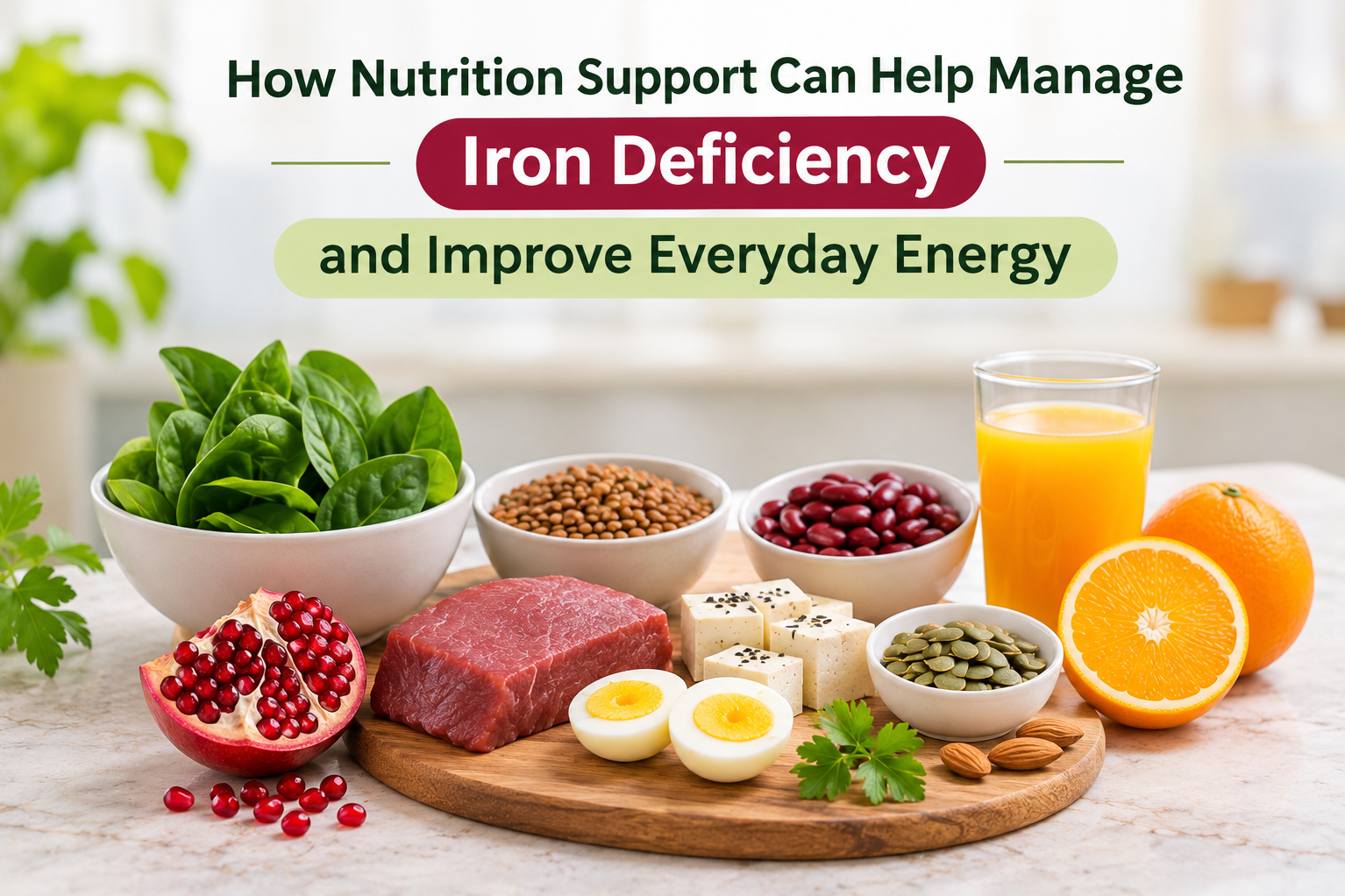
Heme iron from red meat, poultry, and seafood is absorbed more efficiently than non-heme iron from plants. Useful sources include:
- Beans, lentils, tofu, nuts, seeds, spinach, and iron-fortified cereal
- Lean red meat, chicken, turkey, sardines, and shellfish
People eating vegetarian diets need about 1.8 times the standard food-based target because non-heme iron is less bioavailable. Pair these foods with vitamin C-rich peppers, tomatoes, citrus, berries, or broccoli.
If tests confirm deficiency or anaemia, follow prescribed iron treatment rather than relying on diet alone; do not take more than 45 mg daily without medical supervision.
How to Help Your Body Absorb More Iron From Meals
Pair non-heme iron with vitamin C at the same meal. Add citrus, berries, peppers, tomatoes, or broccoli to meals containing lentils, beans, tofu, nuts, seeds, vegetables, or fortified cereal. Vitamin C improves absorption; it does not replace enough iron or prescribed treatment.
1. Build the meal around an iron source, such as lentils, beans, tofu, or iron-fortified cereal.
2. Add one vitamin C food, such as sliced peppers with beans, tomatoes with lentils, or fruit with fortified cereal.
3. Keep tea and coffee away from iron-rich meals by about one to two hours. Their polyphenols reduce non-heme iron absorption, so you do not need to eliminate them.
4. Separate calcium-rich foods and calcium supplements from an iron supplement by about two hours. Calcium can interfere with absorption in some circumstances.
5. Check medicines with a pharmacist before changing timing. Antacids and acid-reducing medicines can affect iron absorption, while iron supplements can interfere with medicines such as levothyroxine and some antibiotics.
Heme iron from meat, poultry, and seafood is absorbed more efficiently than non-heme iron, but plant-based meals can still work well when paired thoughtfully. If you take iron tablets, follow the prescribed schedule; taking them with food may reduce stomach symptoms, while changing the dose or timing requires clinical advice.
When Iron Supplements Are Appropriate—and What to Monitor
A confirmed iron-deficiency anaemia in an adult is usually treated with oral iron first. Discuss iron supplements with a clinician before starting, especially if bleeding, malabsorption, inflammation, pregnancy, kidney disease, or another diagnosis could be involved.
- Ask whether a standard ferrous salt, such as ferrous sulfate, is appropriate and how long to take it.
- Report nausea, abdominal pain, constipation, or diarrhoea rather than stopping silently. Your clinician may reduce the dose, change the preparation, or use alternate-day iron; this can improve tolerability but may provide less iron each week.
- Discuss intravenous iron when oral treatment is unsuitable, poorly tolerated, ineffective, or unlikely to absorb, or when iron replacement is urgent. Infusions require medical supervision and are not a routine substitute for tablets.
- Arrange follow-up blood tests. A haemoglobin rise of roughly 10 g/L within about two weeks supports a response in iron-deficiency anaemia, while ferritin and transferrin saturation help assess replenishment and iron availability.
- If results do not improve, review missed doses, continued blood loss, malabsorption, inflammation, and the original diagnosis with your clinician. Feeling more energetic alone does not prove treatment is working.
Continue treatment for the period advised, since haemoglobin can recover before iron stores are fully replaced. Keep iron away from children; overdose can be dangerous.
How Personal Nutrition Support Fits Into Medical Iron Treatment
A personalised nutrition plan can make iron treatment workable without treating food as a substitute for diagnosis. It can match iron-rich meals to your diet, pair plant sources with vitamin C, and adjust tea, coffee, calcium, or supplement timing when absorption is a concern.
Dietitian support also helps identify why intake may not be the whole problem. Heavy menstrual bleeding, gastrointestinal bleeding, pregnancy, blood donation, coeliac disease, inflammatory bowel disease, or previous gastrointestinal surgery can keep iron stores low. Tell your doctor about these possibilities; diet alone will not correct continuing loss or poor absorption.
Use the plan to make prescribed treatment easier to follow: choose a supplement time you can maintain, record constipation or nausea, and ask before changing the dose or switching to intravenous iron. The Zenlife can help translate your clinician’s treatment into meals, routines, and symptom tracking rather than creating a separate diet protocol.
Energy is useful to track, not proof of recovery. Your clinician should recheck blood results; a haemoglobin rise of about 10 g/L within two weeks supports an oral-iron response. If results do not improve, review adherence, bleeding, absorption, inflammation, and the diagnosis instead of simply adding more iron.
Black or bloody stools, fainting, chest pain, or marked breathlessness need prompt medical assessment.
Frequently asked questions
Can you have iron deficiency with normal haemoglobin?
Yes. Ferritin can fall before haemoglobin drops, so normal haemoglobin does not rule out depleted iron stores.
Which blood tests check for iron deficiency?
A complete blood count checks haemoglobin and red-cell measures; ferritin assesses stored iron. Transferrin saturation and other iron studies can add context, especially when inflammation affects ferritin.
What foods provide iron?
Good sources include meat, poultry, seafood, eggs, lentils, beans, tofu, leafy greens, fortified cereals, nuts, and seeds. Heme iron from animal foods is absorbed more readily than non-heme iron from plants.
How can you absorb more iron from meals?
Combine plant-based iron with vitamin C foods such as citrus, tomatoes, peppers, or broccoli. Keep tea, coffee, and calcium-rich foods away from iron-focused meals when advised by your clinician.
When are iron supplements appropriate?
Use supplements when testing confirms deficiency or a clinician recommends them. The dose and duration depend on the cause, severity, tolerance, pregnancy status, and other health factors.