

A pregnancy breakfast is more complete when it combines protein, a high-fibre carbohydrate, fruit or vegetables, and a calcium-rich food rather than relying on tea, toast, poha, or juice alone. You will be able to assemble practical Indian breakfast portions, adjust them for trimester symptoms and blood-glucose needs, and choose safer foods and drink timings.
Key takeaways
- Combine protein, high-fibre carbohydrates, fruit or vegetables, and calcium.
- Choose smaller, cooler meals when nausea makes breakfast difficult.
- Pair carbohydrates with protein and fibre for steadier blood glucose.
- Discuss personalised guidance when symptoms, diabetes, or dietary restrictions complicate meals.
The four foods that make breakfast balanced during pregnancy
If you are asking what a balanced breakfast should actually contain, use four parts: protein, a high-fibre carbohydrate, fruit or vegetables, and a calcium-rich food. This combination keeps breakfast more nourishing than tea with toast, plain poha, or fruit juice alone.
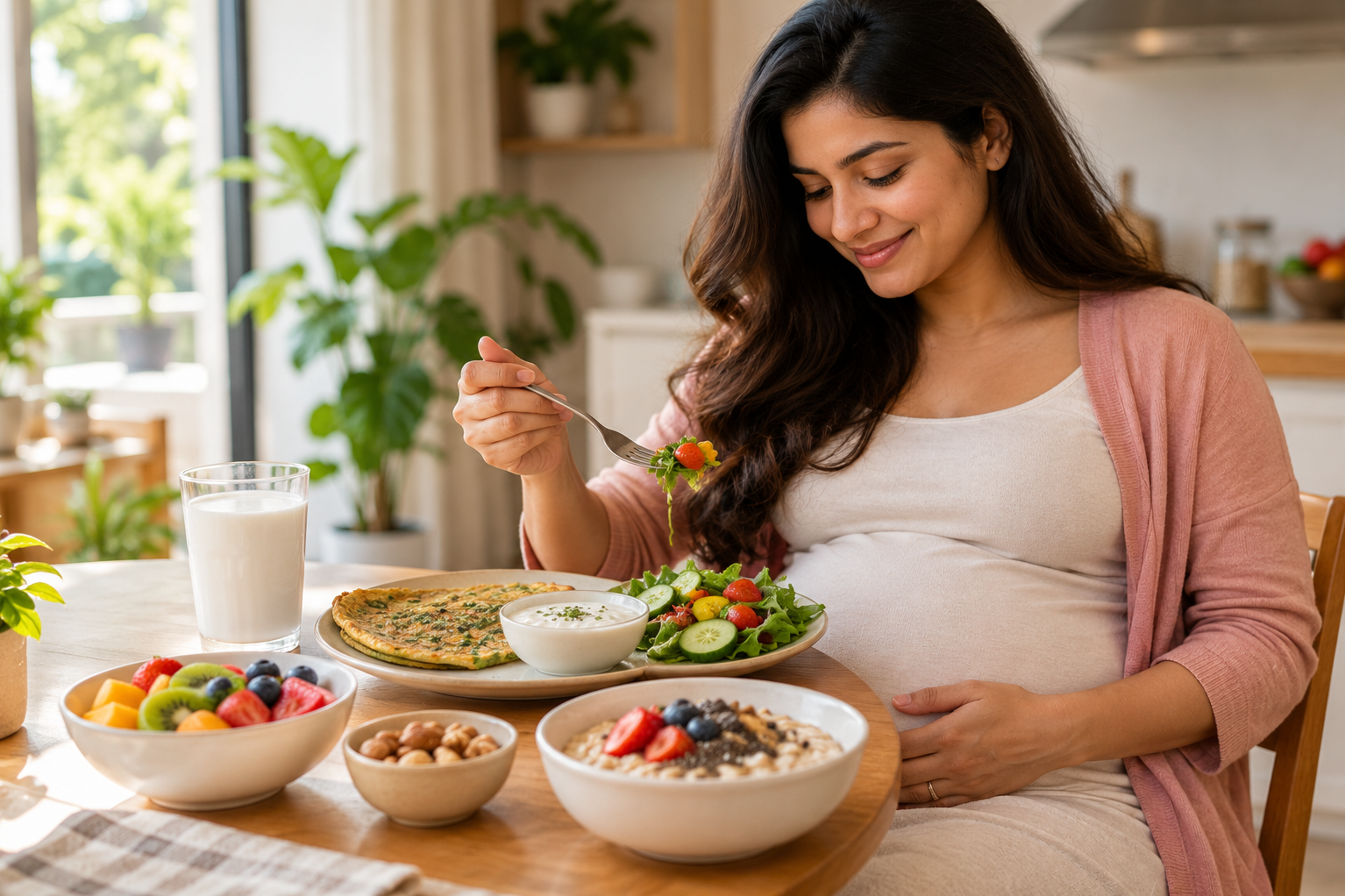
- Protein: Choose two eggs, ¾ cup cooked moong dal, ½–¾ cup chana, or two medium besan or moong-dal chillas.
- High-fibre carbohydrate: Serve one cup cooked oats or poha, two small whole-wheat rotis, two idlis, or two slices of whole-grain toast.
- Fruit or vegetables: Add one small fruit, such as an orange, apple, or guava, or one cup cooked vegetables. Pair iron-rich foods with vitamin-C-rich produce.
- Calcium-rich food: Include one cup pasteurised milk, ¾–1 cup plain curd, or calcium-fortified soy milk.
Practical combinations include oats with milk, nuts, seeds, and fruit; idli with sambar and curd; or poha with peanuts, vegetables, and curd. Keep nuts and seeds to about one tablespoon each because they are energy-dense.
Pregnancy breakfast nutrition must also include safe preparation: use pasteurised dairy, fully cooked eggs, and thoroughly cooked sprouts. Portion needs change with trimester, weight trend, glucose readings, activity, and medical conditions, so a balanced breakfast pregnancy Khar West plan should be personalised rather than copied from a fixed menu.
Adjust breakfast for trimester symptoms and morning sickness
A larger breakfast is not usually needed in the first trimester, but nausea can make a normal meal impossible. Adapt pregnancy breakfast nutrition to what you can keep down, then rebuild balance across the morning rather than forcing one plate.
- First trimester: Keep dry whole-grain toast or crackers beside the bed and eat before standing if morning sickness is strongest on waking. Choose cool, low-smell foods such as overnight oats, yoghurt with banana, or a small egg-and-toast portion; add a second protein or calcium food later if breakfast is incomplete.
- Second trimester: Energy needs rise by about 340 kcal per day, so increased appetite can justify a larger serving or a planned snack, not a sugar-heavy breakfast. For constipation, use oats or whole-grain poha with fruit, chia or ground flaxseed, and water. For reflux, reduce fried or spicy foods, keep portions moderate, and remain upright after eating.
- Third trimester: About 450 extra kcal per day may be needed, but the growing uterus can cause early fullness and reflux. Split breakfast into two smaller servings, such as half a besan chilla with curd followed later by fruit and nuts; eat slowly and avoid lying down after meals.
Persistent vomiting, inability to keep fluids down, or rapid weight loss needs prompt medical advice. Adjust portions for appetite, weight trend, glucose results, and fetal growth rather than using the same breakfast throughout pregnancy.
Use breakfast to supply pregnancy nutrients safely
Breakfast can supply several pregnancy nutrients, but food does not replace prescribed supplements. Pregnancy breakfast nutrition works best when you combine a protein food, high-fibre carbohydrate, fruit or vegetables, and a calcium-rich food.
| Nutrient | Breakfast sources | Important point |
|---|---|---|
| Folate | Lentils, beans, leafy greens, fortified grains | Aim for 600 micrograms dietary folate equivalents daily; continue prescribed folic acid. |
| Iron | Eggs, lentils, beans, fortified cereals | Pair plant sources with fruit or vegetables rich in vitamin C. |
| Protein and choline | Eggs, yoghurt, milk, tofu, dals | Fully cook eggs and use pasteurised dairy. |
| Calcium and vitamin D | Milk, yoghurt, paneer, calcium-set tofu, fortified beverages | Most pregnant adults need about 1,000 milligrams of calcium daily. |
| Iodine, omega-3 fats and fibre | Iodised salt, walnuts, chia, oats, fruit and vegetables | Ask your clinician before using fish or algae-based supplements. |
Choose pasteurised milk, yoghurt and paneer; avoid unpasteurised products, raw eggs, undercooked sprouts and high-mercury fish. Refrigerate perishable leftovers within two hours, or within one hour in very hot weather, and reheat them until steaming.
Count caffeine from tea, coffee, cola, chocolate and energy drinks against your clinician’s advised limit. Tea or coffee with an iron-rich breakfast reduces non-haem iron absorption; separate them from meals or prescribed iron if you have low ferritin or anaemia. Do not assume everyone must eliminate tea or coffee.
Take iron, calcium and other prescribed supplements on the schedule set by your clinician, because calcium can interfere with iron absorption. સત
Build a breakfast that supports steadier blood glucose
A glucose-friendly breakfast starts with a measured carbohydrate portion, not a carbohydrate-free meal. Build it around these four parts:
- A high-fibre carbohydrate, such as oats, whole-grain toast, or a smaller serving of poha
- Protein, such as eggs, moong dal, besan, Greek yoghurt, paneer, or tofu
- Fibre from vegetables, chia seeds, flaxseed, or a whole fruit
- Fat from nuts, seeds, avocado, or a small amount of oil
Add a calcium-rich food such as curd, milk, or fortified soy milk. For example, choose one vegetable moong-dal chilla with curd and a small fruit, or oats cooked in milk with nuts, seeds, and berries. These combinations digest more slowly than tea with toast, fruit juice, sweetened cereal, or several slices of bread.
Breakfast glucose can rise sharply during pregnancy because morning insulin resistance is higher. If your readings climb after breakfast, reduce the carbohydrate portion before removing it entirely, and avoid juice and added sugar. Test the portion against your care team’s target plan; a large bowl of poha may need adjustment even when it contains vegetables.
A balanced breakfast pregnancy plan in Khar West should use your readings, trimester, activity, and prescribed treatment to set portions. Do not change insulin or skip breakfast without medical advice.
When a personalised breakfast plan is worth discussing
Review your breakfast plan with an obstetrician or dietitian when your weight trend, blood tests, symptoms, or medical conditions make a standard portion unreliable. Ask for individual guidance if you have gestational diabetes, anaemia or low ferritin, high blood pressure, thyroid or kidney disease, food allergies, severe vomiting, or a vegetarian or vegan diet.
A clinical nutrition Khar West consultation with The Zenlife can help translate those findings into safe portions and supplement timing without replacing antenatal care.
Pregnancy and postpartum breakfast nutrition have different targets. Pregnancy supports fetal growth and requires attention to iron, folate, calcium, glucose, and food safety; postpartum planning also considers recovery, breastfeeding, sleep disruption, appetite, and gradual weight changes.
| Stage | What to review | Why it differs |
|---|---|---|
| Pregnancy | Portion size, weight gain, glucose readings, haemoglobin, ferritin, blood pressure, and prescribed supplements | Needs change with trimester, fetal growth, and pregnancy complications |
| Breastfeeding postpartum | Appetite, fluids, protein, iron status, calcium intake, and breastfeeding pattern | Milk production and recovery affect hunger and meal timing |
| Not breastfeeding postpartum | Recovery nutrition, hunger, activity, and weight goals | Lactation-related energy demands do not apply |
Book a review after delivery if gestational diabetes occurred, bleeding was heavy, fatigue persists, or you are restricting food to lose weight quickly. A clinician can also adjust breakfast when medication, breastfeeding, or a changed appetite makes your previous plan unsuitable.
Related services
Maternal Nutrition Plan 4 – Maternal Nutrition | The Zen Life by Zainab Chunawala The Zen Life by Zainab Chunawala offers personalized Maternal Nutrition guidance to... View service → |
Clinical Nutrition Plan 3 – Clinical Nutrition | The Zen Life by Zainab Chunawala The Zen Life by Zainab Chunawala offers personalized Clinical Nutrition support... View service → |
Frequently asked questions
What should a balanced breakfast contain during pregnancy?
Include protein, a high-fibre carbohydrate, fruit or vegetables, and a calcium-rich food. Examples include eggs with whole-grain toast and fruit, or yogurt with oats, nuts, and berries.
How should you adjust breakfast for morning sickness?
Eat smaller portions, keep plain crackers or toast beside your bed, choose cooler foods if smells trigger nausea, and sip fluids between meals. Seek medical advice if you cannot keep fluids down.
How can breakfast support steadier blood glucose during pregnancy?
Pair carbohydrates with protein, fibre, and fat. Choose oats, whole-grain toast, or unsweetened poha with eggs, yogurt, dal, nuts, or vegetables instead of juice or sweetened cereal alone.
When is a personalised pregnancy breakfast plan worth discussing?
Discuss one with a qualified dietitian if you have gestational diabetes, severe nausea, anaemia, food allergies, vegetarian or vegan dietary needs, poor weight gain, or a pregnancy-related medical condition.