

Fat supplies concentrated energy, helps form fetal and maternal cells, supports hormone production, and allows your body to absorb vitamins A, D, E and K. You will be able to compare fat types, choose safer local foods, build practical portions, and identify when DHA or individual clinical guidance needs extra attention.
Key takeaways
- Keep healthy fats in pregnancy meals; fat supports cells, hormones and concentrated energy needs.
- Choose low-mercury fish and ask about DHA-rich options during pregnancy.
- Use nuts, seeds, dairy, legumes and measured oils in familiar Mumbai meals.
- Compare saturated fat, trans fat and serving sizes on nutrition labels.
Why dietary fat is essential during pregnancy
Fat provides 9 kcal per gram, making it a concentrated energy source when pregnancy increases your nutritional demands. It also helps build every cell membrane and supports hormone production, so removing all fat is not appropriate for routine pregnancy nutrition.
Your body needs dietary fat to absorb vitamins A, D, E and K from food. These vitamins support vision, bones, immunity, blood clotting and other processes that affect both you and your developing baby.
- It supplies energy for maternal tissue growth and daily activity.
- It helps form the baby’s brain, eyes and nervous-system cell membranes.
- It supports hormone production involved in pregnancy and fetal development.
- It helps meals carry fat-soluble vitamins into the body.
Understanding why your body needs healthy fats matters when planning pregnancy nutrition in Mumbai; it does not mean adding large amounts of ghee, butter or cream. Adults generally need about 20–35% of energy from fat, with more unsaturated fat and less saturated and trans fat.
Fat is energy-dense and can slow stomach emptying, so portions still matter.
Healthy fats can fit gestational-diabetes nutrition, but replacing carbohydrate with large amounts of saturated fat is not a sound default. Use glucose readings, weight gain, food patterns and prescribed treatment to guide a clinical plan.
DHA, omega-3 fats and safer fish choices
DHA is a long-chain omega-3 fat that becomes part of the developing baby’s brain and retina. That makes it different from fats used mainly for energy or stored in body tissue.
Plant foods supply ALA, but the body converts only a limited amount of ALA into DHA, so walnuts, chia and ground flaxseed cannot be treated as interchangeable with fish or algae-based DHA.
Build omega-3 intake with these choices:
- Eat 8–12 ounces, or about two to three servings, of lower-mercury fish each week.
- Choose salmon, sardines, anchovies or trout when available; check unfamiliar local fish names against a reliable mercury guide.
- Avoid shark, swordfish, king mackerel and tilefish during pregnancy because they contain high mercury.
- If you are vegetarian or vegan, discuss an algae-derived DHA supplement with your obstetric clinician instead of relying only on ALA-rich seeds.
For healthy fats pregnancy nutrition in Mumbai, fish is not the only route. Add ground flaxseed, chia, walnuts or unsweetened peanut butter to meals, but remember that these provide ALA rather than much DHA.
Use measured oil and keep the whole meal balanced, especially with gestational diabetes; large amounts of fat add concentrated energy and can slow digestion.
Healthy fat sources that fit Mumbai meals
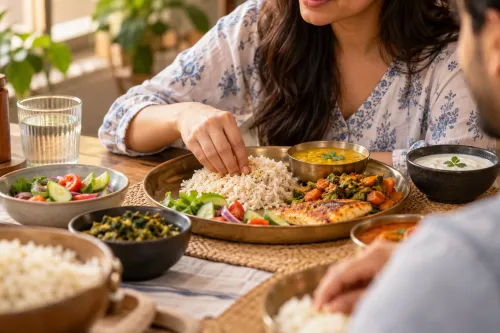
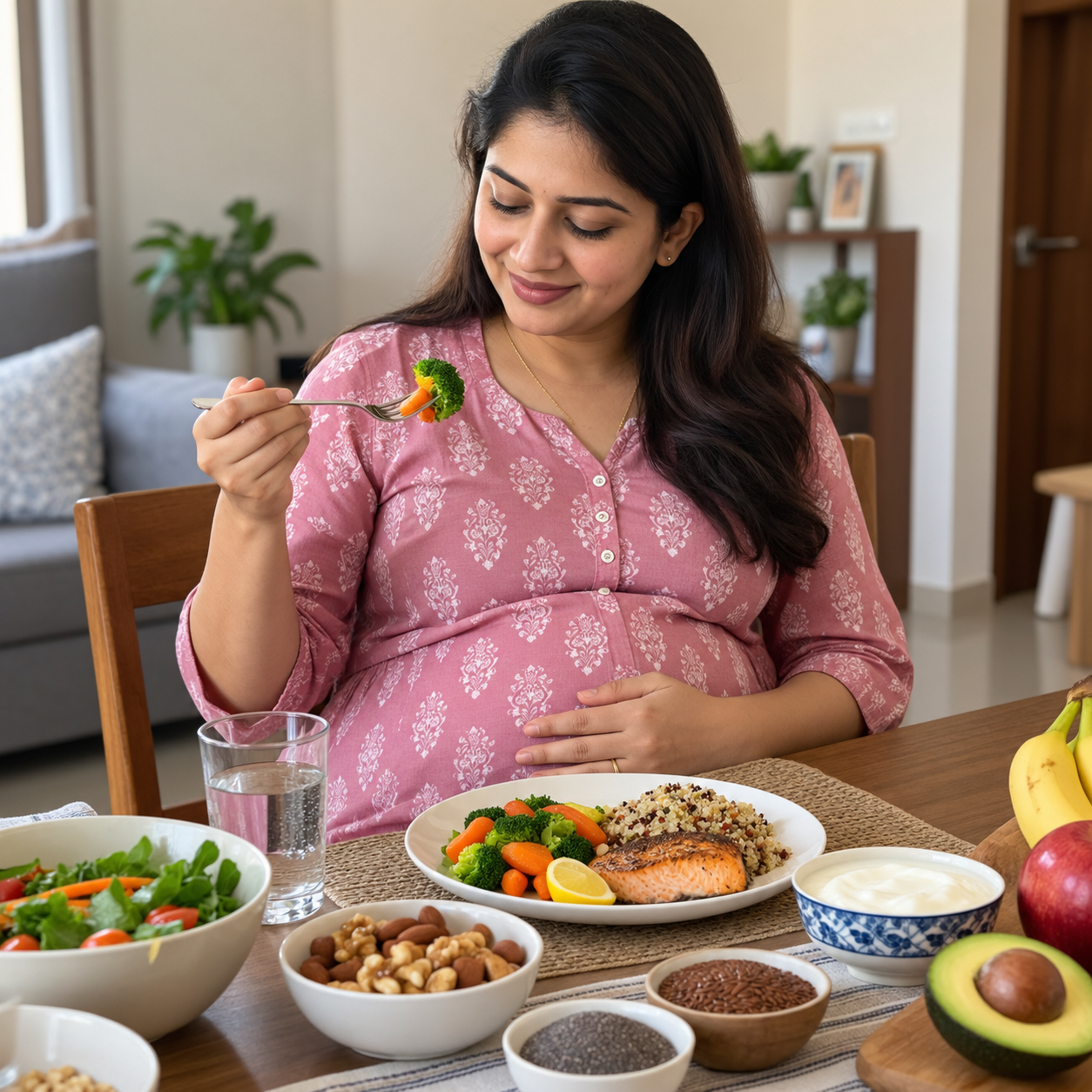
Build healthy fat sources for pregnancy into familiar meals rather than adding large amounts of ghee or imported foods. Use measured oil for sabzi, nuts with breakfast, seeds in dal or curd, and low-mercury fish with rice or roti.
OptionSensible portionMumbai-friendly useGroundnut, mustard or rice-bran oil1 teaspoon per person per cooked mealTadka, bhaji or fish preparationWalnuts or groundnuts15–20 g, about a small closed handfulWith poha, upma or fruitChia or ground flaxseed1 tablespoon, ground if using flaxseedStir into curd, oats or a smoothieSesame seeds1 tablespoonAdd to chutney, dal or vegetable dishesUnsweetened peanut butter1 tablespoonSpread on toast or with bananaLow-mercury fish100–120 g cookedServe with rice, roti or saladEggs or pasteurised dairy1 egg, or 150–200 g curdAdd to breakfast or a meal
Vary these choices because their fatty-acid profiles differ; no single oil is universally best. Fish must be thoroughly cooked, and dairy must be pasteurised. Avoid raw seafood, unpasteurised products and refrigerated smoked seafood during pregnancy.
Fat provides 9 kcal per gram, so extra spoonfuls add up quickly. If you have gestational diabetes, pair the portion with the whole meal and your glucose plan; replacing carbohydrate with large amounts of ghee, butter or cream is not a sound default.
How to choose oils and read fat labels
Check the nutrition panel per 100 g and per serving; the serving size can make a small packet look healthier than it is. Total fat alone does not tell you whether the fat is useful. Look at the separate lines for saturated fat and trans fat, then read the ingredients.
Label or foodWhat it usually meansPractical choiceUnsaturated fatMonounsaturated or polyunsaturated fat, found in mustard, groundnut, rice-bran and olive oils, nuts and seedsUse varied sources in measured portionsSaturated fatHigher levels in ghee, butter, cream, fatty meat and some packaged foodsLimit rather than make it your main cooking fatTrans fatIndustrially altered fat; “partially hydrogenated oil” in the ingredient list is a warningAvoid products listing itFried-food fatOil absorbed during frying; repeated heating can degrade oil and adds energy without improving nutritionPrefer fresh, lightly cooked foods over regularly fried snacks
For routine pregnancy nutrition, do not swap all carbohydrate for large amounts of ghee, butter or cream. Fat supplies 9 kcal per gram, so generous pours can raise total energy quickly while slowing digestion.
The adult reference range for total fat is 20–35% of energy, with emphasis on unsaturated fats and limits on saturated and trans fats.
Use these label checks:
- Choose oils with little saturated fat and no partially hydrogenated oil.
- Compare products by the same 100 g measure.
- Treat “zero trans fat” claims cautiously if the ingredient list names partially hydrogenated oil.
- Do not reuse frying oil or treat fried food as equivalent to the original unsaturated oil.
When pregnancy nutrition needs individual planning
A general list of healthy fats is not enough when pregnancy changes your medical or nutritional needs. Seek clinical nutrition during pregnancy if you have:
- Gestational diabetes or glucose readings outside your care team’s targets
- Severe nausea or vomiting that limits food or fluids
- Anemia, food allergy, or a vegetarian or vegan diet
- A pre-pregnancy low weight or faster-than-expected weight gain
- Twins or another multiple pregnancy
- A thyroid, kidney, gastrointestinal, or other condition requiring medication
With gestational diabetes, adding large amounts of ghee, butter, cream, or nuts is not a substitute for managing carbohydrates. Fat provides 9 kcal per gram and can slow stomach emptying, so portion size, meal composition, glucose readings, weight gain, and treatment all belong in the plan.
Replacing carbohydrate with substantial saturated fat is not a sound default.
Individual planning also checks gaps that fat cannot fix, including protein, iron, iodine, calcium, omega-3, and total energy. Healthy fats pregnancy nutrition in Mumbai does not require imported products; a dietitian can work with affordable groundnuts, sesame, walnuts, local oils, eggs, dairy, or suitable low-mercury fish.
The Zenlife can help you organise a maternal nutrition consultation in Khar West around your food pattern, symptoms, reports, and medical advice rather than a generic food list. Your obstetrician’s treatment plan remains the priority.
Related services
Maternal Nutrition
Plan 4 – Maternal Nutrition | The Zen Life by Zainab Chunawala The Zen Life by Zainab Chunawala offers personalized Maternal Nutrition guidance to...
View service →Clinical Nutrition
Plan 3 – Clinical Nutrition | The Zen Life by Zainab Chunawala The Zen Life by Zainab Chunawala offers personalized Clinical Nutrition support...
Frequently asked questions
- Why does your body need healthy fats during pregnancy?
- Fat supplies 9 kcal per gram, helps build cell membranes and supports hormone production during pregnancy.
- Which fish are safer sources of DHA during pregnancy?
- Choose low-mercury fish and follow local medical guidance on portions and frequency; avoid high-mercury fish and raw seafood.
- What healthy fat sources fit Mumbai pregnancy meals?
- Use measured portions of nuts, seeds, dairy, legumes, fish and plant oils in meals such as dal, roti, rice and vegetable dishes.
- How should you compare cooking oils and fat labels?
- Check serving size, saturated fat and trans fat, then compare products using the same serving size rather than front-of-pack claims.
- When does pregnancy nutrition need individual planning?
- Seek individual clinical nutrition guidance when you have diabetes, thyroid disease, high blood pressure, severe nausea, food allergies or restricted eating patterns.